Gear Guide
Best Camera for Beginners
What to buy, what to skip, and why the camera matters less than you think.
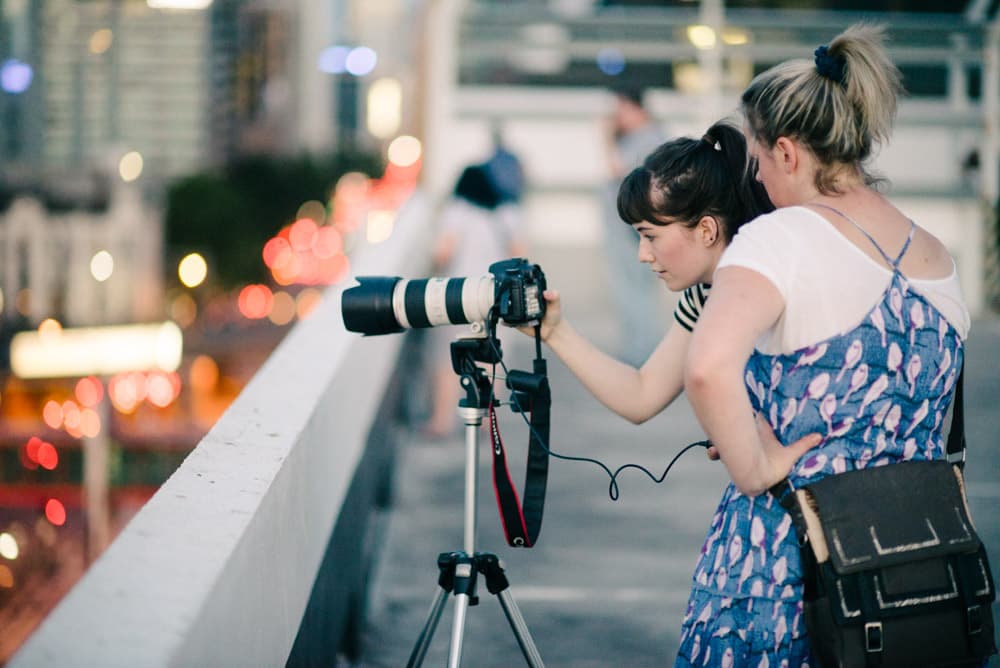
The Uncomfortable Truth About Camera Gear
In 2026, the best beginner cameras are mirrorless: the Sony a6100, Nikon Z50 II, Canon EOS R50, and Fujifilm X-T30 II. All offer full manual mode and cost between $700-1200 AUD with a kit lens. This guide is written by Daniel Bilsborough, a National Geographic-featured photographer who has taught over 1,500 beginners in Melbourne.
The best camera for a beginner is the one that gets you shooting in manual mode. Not the one with the most megapixels, the fastest burst rate, or the best video specs. Those things matter later. Right now, they don't.
After teaching over 1,500 students, Daniel Bilsboroughhas seen people take incredible photos on $500 cameras and terrible photos on $3,000 ones. The difference is never the gear. It's whether the person understands light, composition, and their camera's manual controls.
That said, some cameras make learning easier than others. Here's what to look for and what to ignore.
What Actually Matters in a Beginner Camera
- ■Manual mode. Non-negotiable. If it doesn't have full manual control (M on the mode dial), skip it.
- ■Interchangeable lenses. The kit lens gets you started. Being able to swap to a 50mm f/1.8 later is how you level up without buying a new body.
- ■RAW shooting. JPEG throws away data. RAW keeps everything, giving you far more flexibility in editing.
- ■Comfortable in your hands. You'll hold this thing for hours. If it feels wrong in a shop, it'll feel worse on a 3-hour walk.
What to Ignore (For Now)
- ■Megapixels. Anything above 20MP is more than enough. You're not printing billboards.
- ■Video specs. Unless you're specifically buying for video, 4K at 30fps is plenty. 8K is marketing.
- ■Burst rate. You're not shooting sports (yet). 5-10 frames per second is fine.
- ■Wi-Fi/Bluetooth. Nice for transferring photos to your phone, but it shouldn't drive a buying decision.
DSLR vs Mirrorless
Mirrorless is the future.Every major manufacturer has moved to mirrorless. New lens development, firmware updates, and innovation are all happening on mirrorless platforms. DSLRs still take great photos, but if you're buying new in 2026, go mirrorless.
Used DSLRs are great value.A second-hand Nikon D7200 or Canon 80D for $400-600 is a lot of camera. The image quality is excellent, they're built like tanks, and there are decades of cheap lenses available. If budget is tight, a used DSLR beats a cheap new mirrorless every time.
Cameras Worth Considering
Sony a6100
Mirrorless (APS-C)Fast autofocus, lightweight, excellent video, huge lens ecosystem. The sweet spot between price and capability for most beginners.
Good
Autofocus is genuinely best-in-class at this price. Eye-tracking works on people and animals. Compact body fits in a small bag.
Bad
Menu system is clunky. No in-body image stabilisation. Kit lens (16-50mm) is average.
Nikon Z50 II
Mirrorless (APS-C)Excellent ergonomics, intuitive menus, strong image quality. Nikon's menu system is the most beginner-friendly on the market.
Good
Feels great in hand. Screen flips for selfies/vlogging. USB-C charging. Weather-sealed body.
Bad
Smaller Z-mount DX lens selection than Sony E-mount. Slightly pricier than competitors.
Canon EOS R50
Mirrorless (APS-C)Lightest and smallest option. Great colour science straight out of camera. If you want something truly compact that still shoots manual, this is it.
Good
Tiny and light. Excellent auto white balance. Good video for the price. Guided UI mode for learners.
Bad
Smaller grip can be uncomfortable with bigger lenses. Electronic viewfinder is basic.
Fujifilm X-T30 II
Mirrorless (APS-C)Beautiful film simulation modes, retro design with physical dials, excellent JPEG colours. If you want photos that look good without editing, Fuji is hard to beat.
Good
Film simulations are genuinely unique. Physical aperture and shutter speed dials teach you manual mode by design. Great build quality.
Bad
Autofocus is good but not Sony-level. No fully articulating screen. Fuji lenses tend to be pricier.
Your Phone
The one you already haveModern phones have incredible computational photography. If you're not sure whether you want to invest in a camera, start with your phone. Learn composition, lighting, and timing first. The camera is the last thing that matters. Check out our photography tips for beginners for where to start.
Good
Always with you. No learning curve for the hardware. Forces you to focus on the fundamentals instead of hiding behind gear.
Bad
Limited manual control. Small sensor struggles in low light. No optical zoom on most models. Can't swap lenses.
The First Lens to Buy After the Kit Lens
A 50mm f/1.8 (or the equivalent for your sensor size). Every brand makes one, they cost $100-250, and they completely change how your photos look.
The wide f/1.8 aperture gives you that creamy, blurred background (bokeh) that makes portraits pop. It also lets in far more light than your kit lens, which means better performance in dim conditions. It's sharp, fast, cheap, and teaches you more about photography than any other single purchase.
Got Your Camera? Learn to Use It.
The best investment after buying a camera isn't another lens. It's learning to use the one you have. Daniel Bilsborough's photography course in Melbourne teaches you to shoot in full manual mode in a single 3-hour session. Bring whatever camera you own.