Joseph's Canon R8 Photography Course in Melbourne
From the Yarra River to Hosier Lane, Joseph spent three hours getting his Canon R8 and 24-105mm lens off auto and into full manual mode.
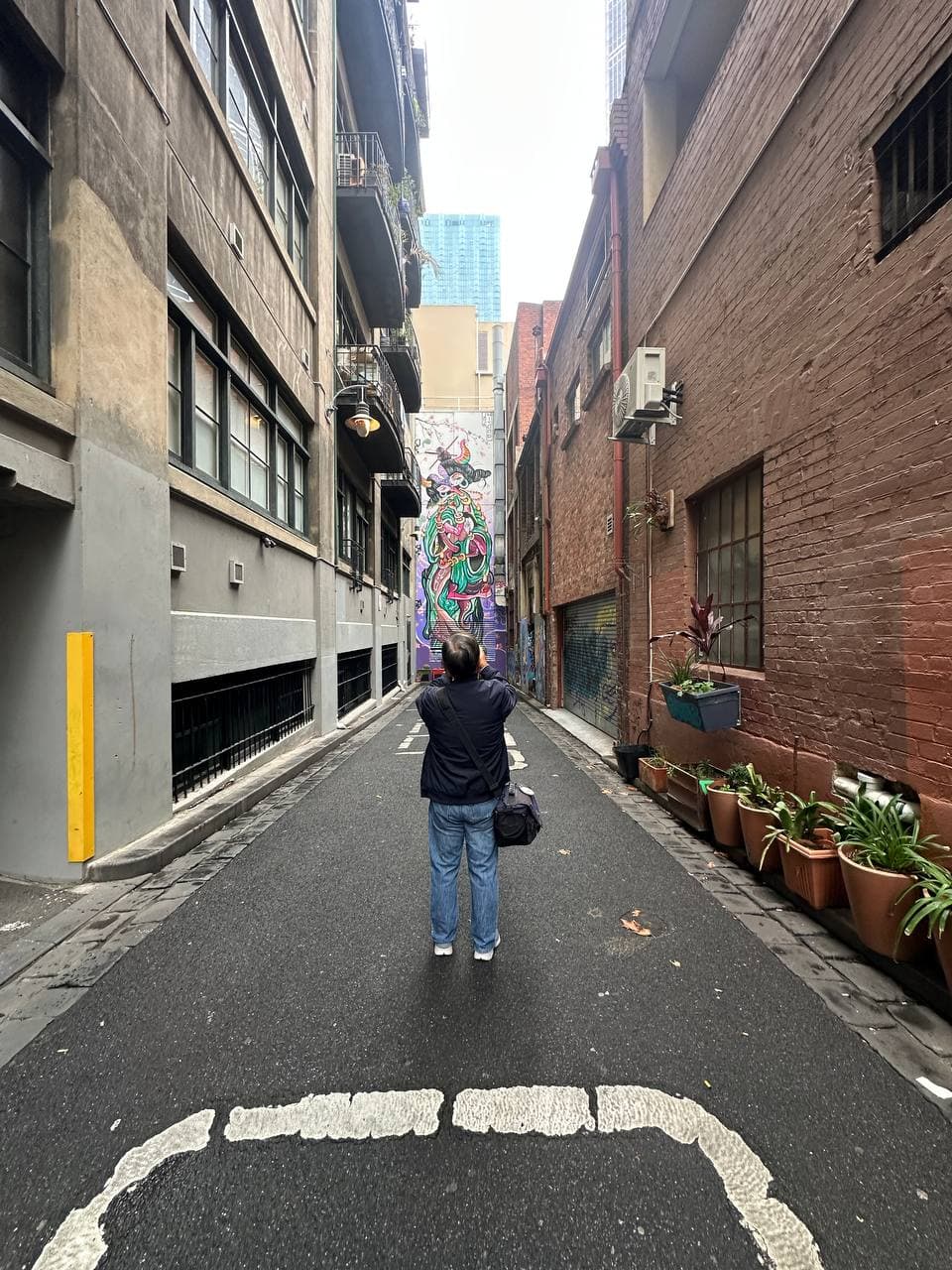
The Gear: Canon R8 + 24-105mm f/4
Joseph brought a Canon R8 and a Canon 24-105mm f/4 lens to the course. The R8 is a full-frame mirrorless camera on Canon's RF mount, and the 24-105mm f/4 covers a wide enough focal range to handle everything from street scenes to tighter compositions without swapping lenses.
The course covers manual mode fundamentals over 3 hours, walking through Melbourne CBD with your own camera.
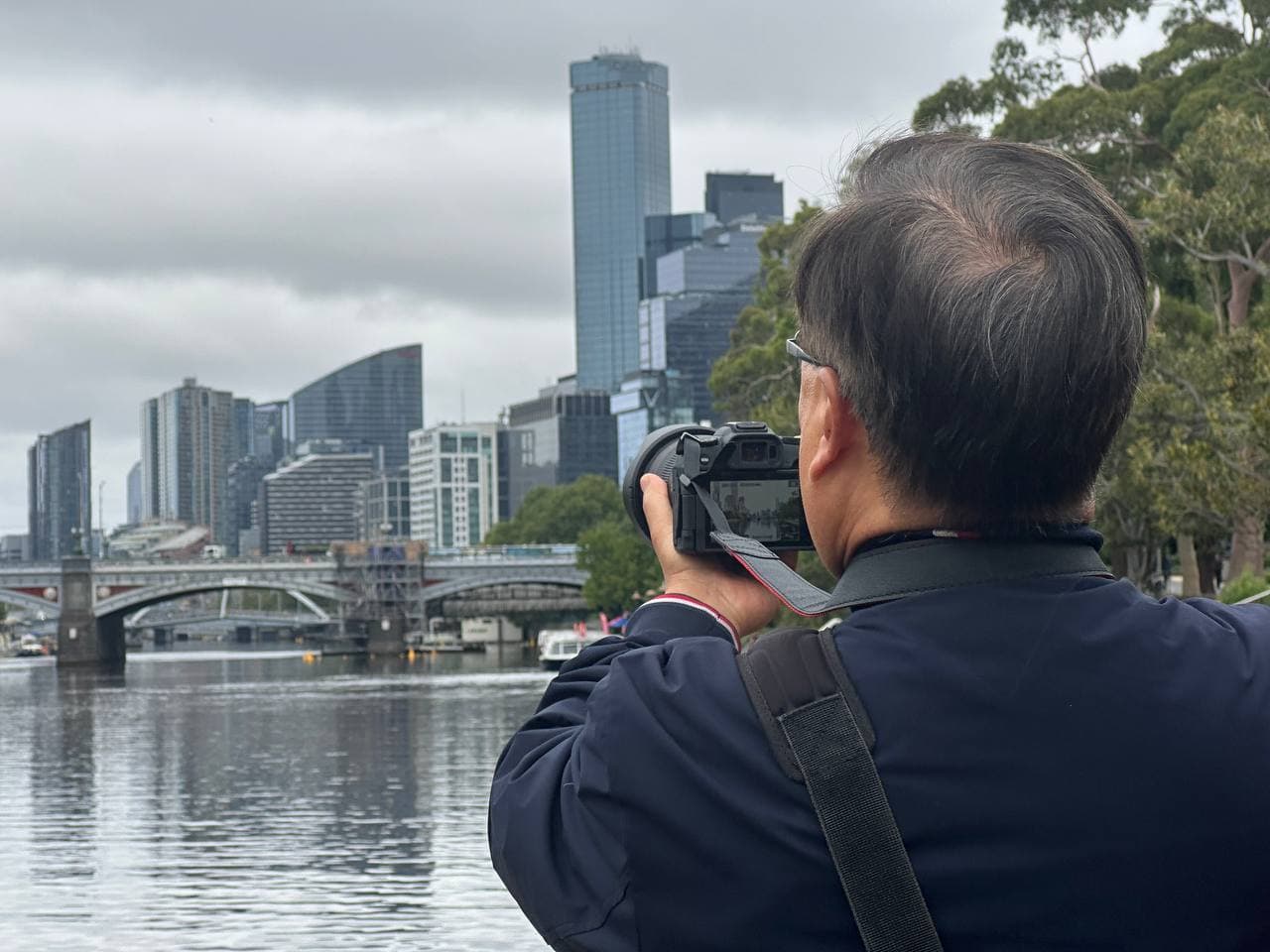
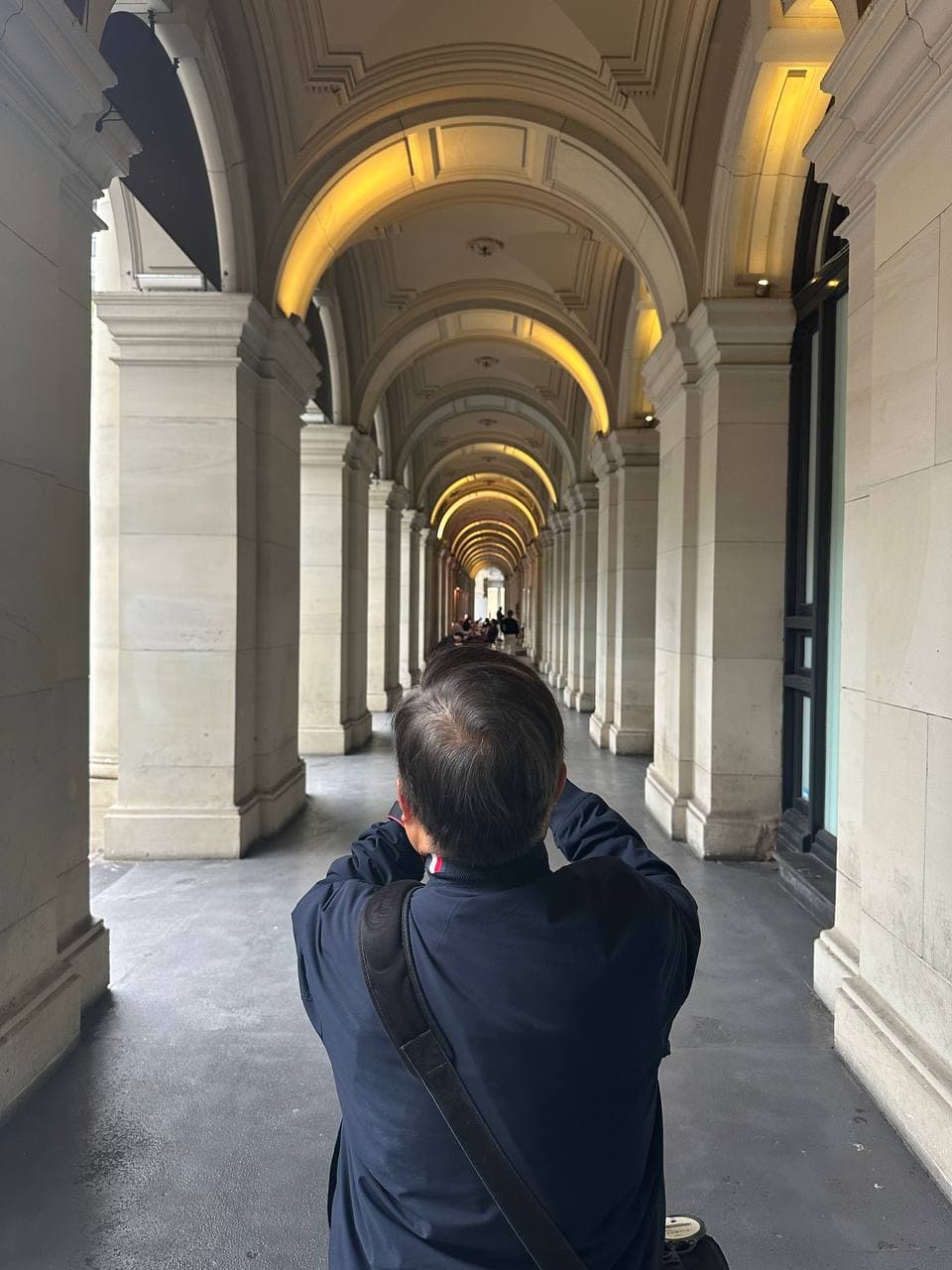
What the Course Covers: Shutter Speed, Aperture, and ISO
The course builds up over the 3 hours, giving each setting enough time to stick. Most students are handling shutter speed, aperture, and ISO themselves by the end.
The Canon 24-105mm f/4 is a good lens for this because the constant f/4 aperture means one less variable changing as you zoom. At f/4 there's enough background separation to see the effect of aperture changes, and stopping down to f/16 makes the difference obvious on the camera's LCD.
ISO rounds out the exposure triangle. The R8 handles high ISO well for a full-frame camera, producing usable images at 3200 and above, which gives you room to work in lower light without the results falling apart.
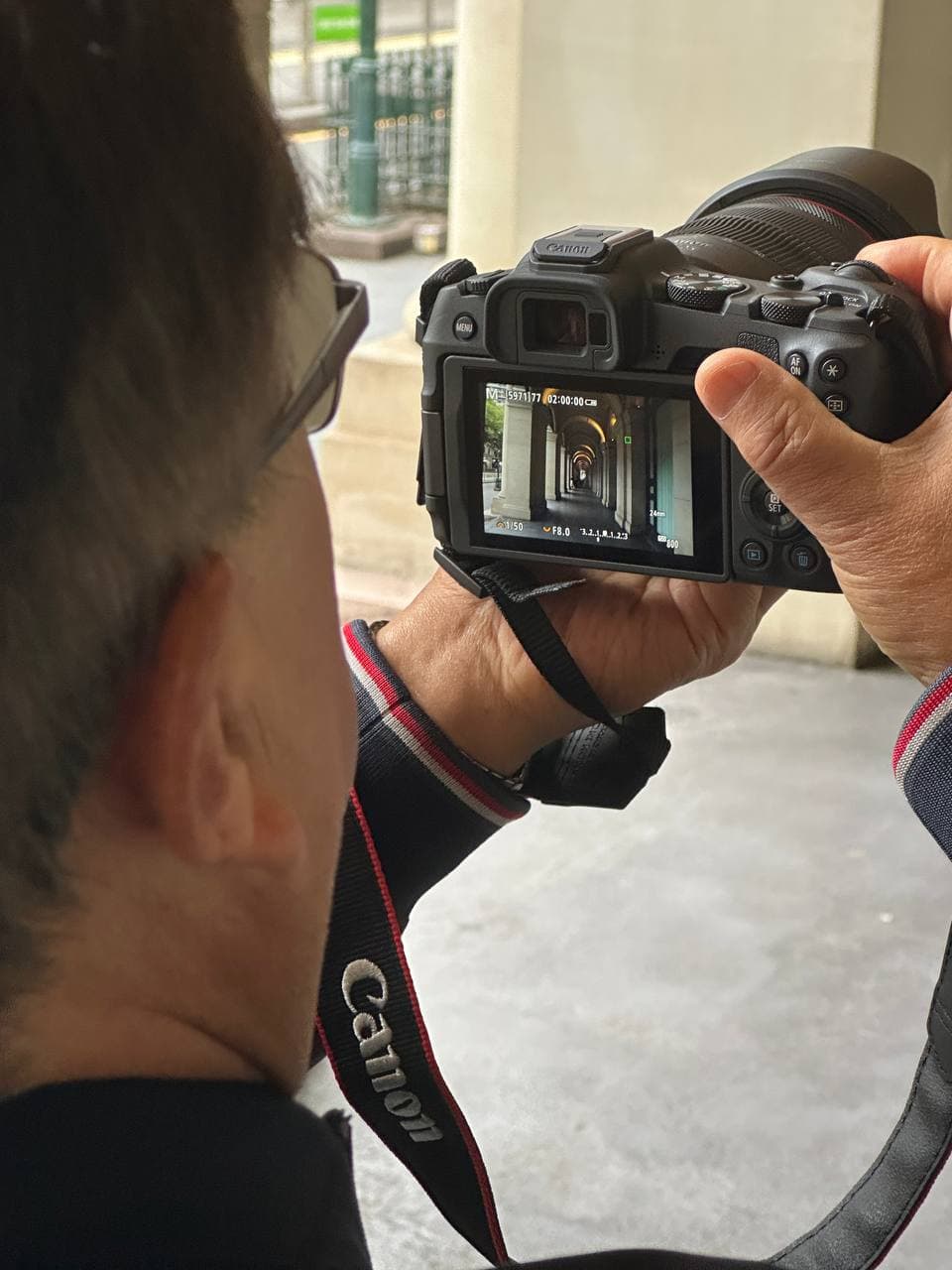
1/60s, f/8, ISO 800. Full manual. Hosier Lane, Melbourne CBD.
Shooting in Hosier Lane
The course route includes Hosier Lane, where the light shifts between open sky and narrow laneway shadow. That range of lighting conditions is useful for practising all three manual settings together, since you need to adjust shutter speed, aperture, and ISO as the scene changes.
The R8's electronic viewfinder helps here because it shows you what the photo will look like before you take it. You turn a dial and the image gets brighter or darker in real time, so there's no guesswork. For a beginner camera, that real-time feedback makes a big difference when learning manual exposure.
Joseph shooting a mural in one of Melbourne's CBD laneways. Full manual mode, Canon R8 + 24-105mm f/4.
The Canon R8 for Beginners
The R8 is a solid camera for learning manual mode. Full-frame sensor with a real-time exposure preview in the electronic viewfinder, so you can see exactly what the photo will look like as you adjust settings. It uses Canon's RF mount, which has a growing range of lenses if you want to add to the kit later.
The 24-105mm f/4 is a strong starting lens. It covers everything you need on a 3-hour walk through Melbourne, and the constant f/4 aperture means one less variable to think about while you're learning. If you're still deciding on gear, have a look at our camera guide for beginners.
Canon R8 Photography Course: Quick Answers
Can you learn manual mode in 3 hours?
The course is structured to get you there, building up until it all clicks. Most students are comfortable with all three settings before the session is over.
Is the Canon R8 good for learning photography?
Yes. The electronic viewfinder shows you what the photo will look like before you take it, which makes learning manual mode significantly easier. High ISO is clean up to 3200+, and Canon's eye-tracking autofocus means you can focus on learning exposure without worrying about nailing focus manually too.
Key Takeaways
- Shutter speed controls motion: fast shutter freezes, slow shutter blurs
- Aperture controls background blur: f/4 soft, f/16 sharp
- ISO is the brightness dial, but grain is the trade-off
- The R8's viewfinder shows the exposure live, so you can see changes before you shoot
- Learn the settings in order, starting with shutter speed
The course is 3 hours walking through Melbourne CBD with your own camera, covering shutter speed, aperture, and ISO until manual mode feels normal. For the editing side, the Lightroom course for beginners picks up where the in-person session leaves off. See Janet's session with a Canon R100 and the kit lens or Ron's session with a Sony A7CR or Elan shooting the same 24-105mm f/4 on a Sony a7 IV for other examples.
Your Turn
The DSLR & Mirrorless Express Photography Course runs on Fridays or Saturdays in Melbourne CBD. Max 2 students. $499. Check our photography tips for beginners if you want a head start before you come.