Canon R100 Kit Lens. First Time Off Auto. Melbourne's Laneways.
Janet had a Canon R100 with the 18-45mm kit lens and had never shot in manual mode. Three hours later she was dialling in her own settings in Melbourne's street art laneways.
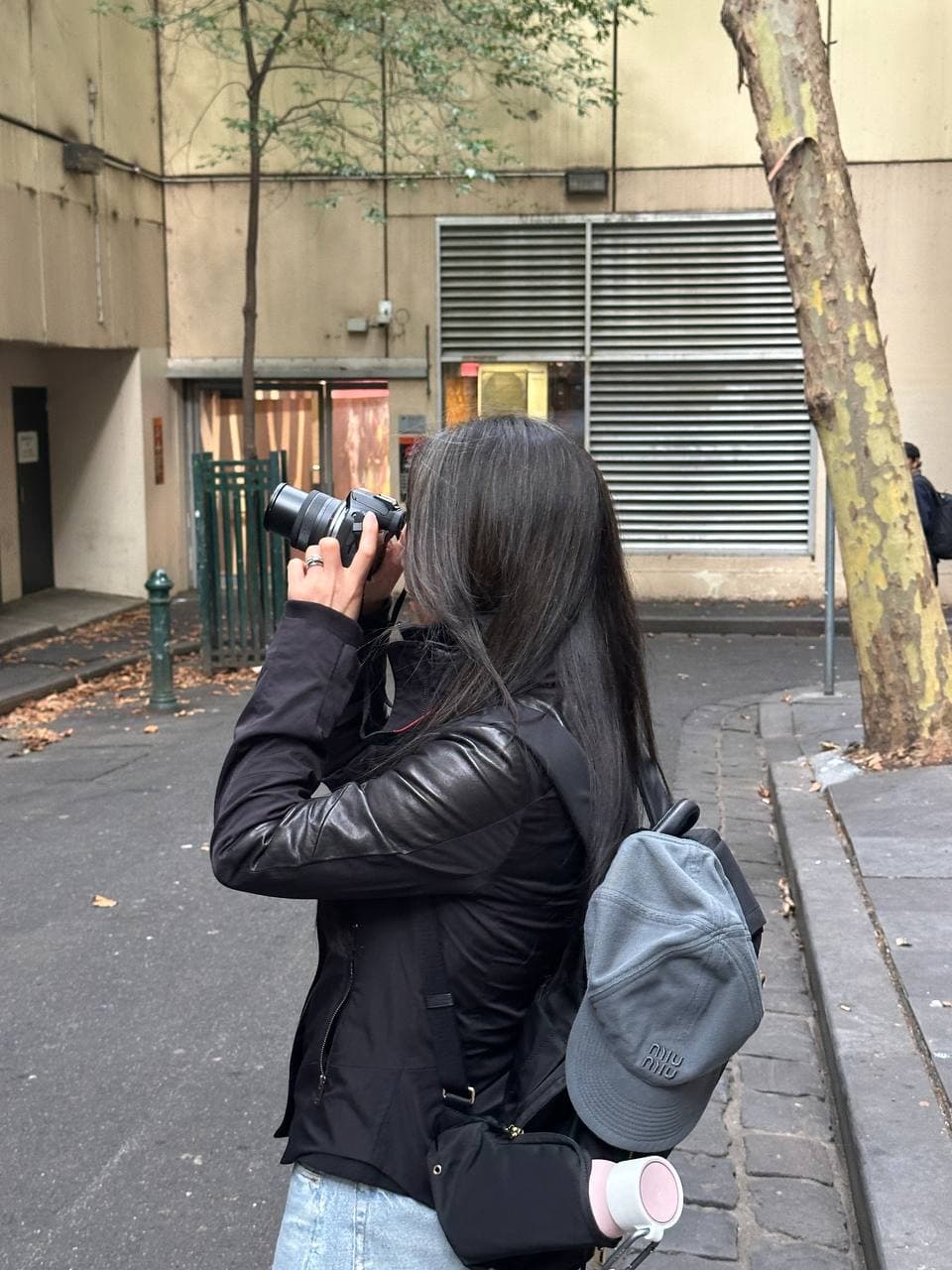
The Setup: Canon R100 + 18-45mm Kit Lens
Janet came in with a Canon R100 and the Canon RF-S 18-45mm f/4.5-6.3 kit lens. Straight out of the box. She actually apologised for not having a better camera.
Here's the thing: the R100 with the kit lens is completely fine for learning manual mode. You don't need a $3,000 body. You need to understand three settings and how they work together. The camera is just the tool. Janet's session at DJB Photography School was a clear example of that.
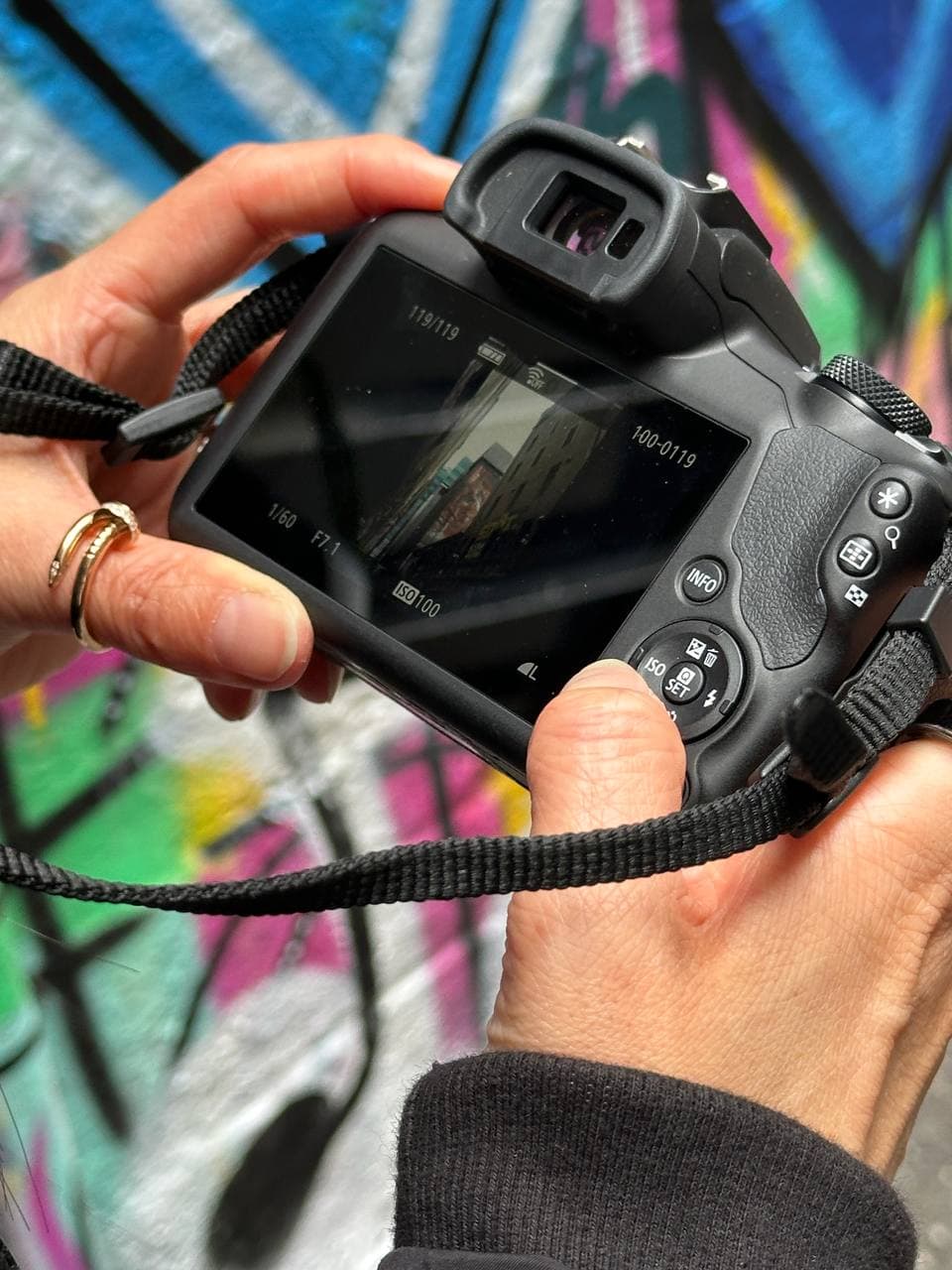
1/60s, f/7.1, ISO 100. Janet reviewing her shot with the street art behind her.
What We Covered: Shutter Speed, Aperture, and ISO
The first stretch was shutter speed only, with aperture and ISO locked. Walking through the CBD, Janet froze pedestrians with a fast shutter, then slowed it down and let them blur past the shopfronts. Once you can see what the dial actually does to the photo on screen, the mystery goes away.
Aperture on the 18-45mm kit lens is actually a good learning tool. It has a variable aperture, meaning it shifts from f/4.5 to f/6.3 as you zoom in. On a more expensive lens that stays constant, but on this one you can actually watch the number change as you twist the zoom ring. Janet could see the camera adjusting in front of her, which made the concept of aperture feel less abstract.
ISO was the last piece. The R100 gets noticeably grainy past ISO 800, which is actually useful when you're learning. On a full-frame camera the grain is so subtle you might not even notice it. On the R100 it's obvious, so Janet could see exactly what the trade-off looks like and decide for herself whether it was worth it for a given shot. That kind of decision-making is the whole point of manual mode.
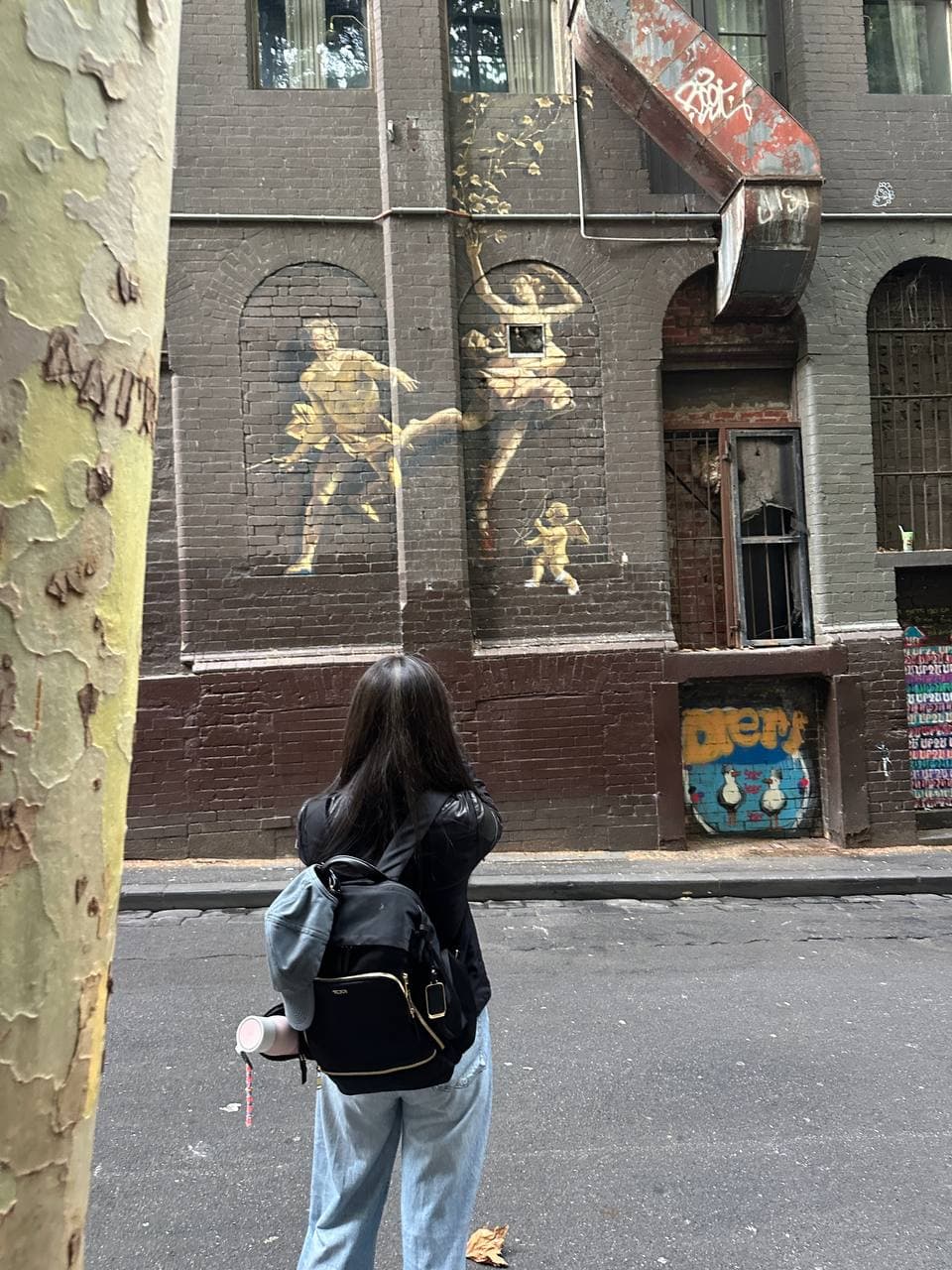
Janet framing a mural in one of Melbourne's CBD laneways. Full manual mode, Canon R100 + 18-45mm kit lens.
Seeing Differently: The Westin Reflection
We were walking past The Westin Melbourne and Janet stopped dead. She'd spotted her own reflection in the glass entrance and wanted to shoot it. That's what happens when you start learning to see. Melbourne is full of reflections and light and framing opportunities. Hundreds of people walk past The Westin every hour and never notice what Janet saw.
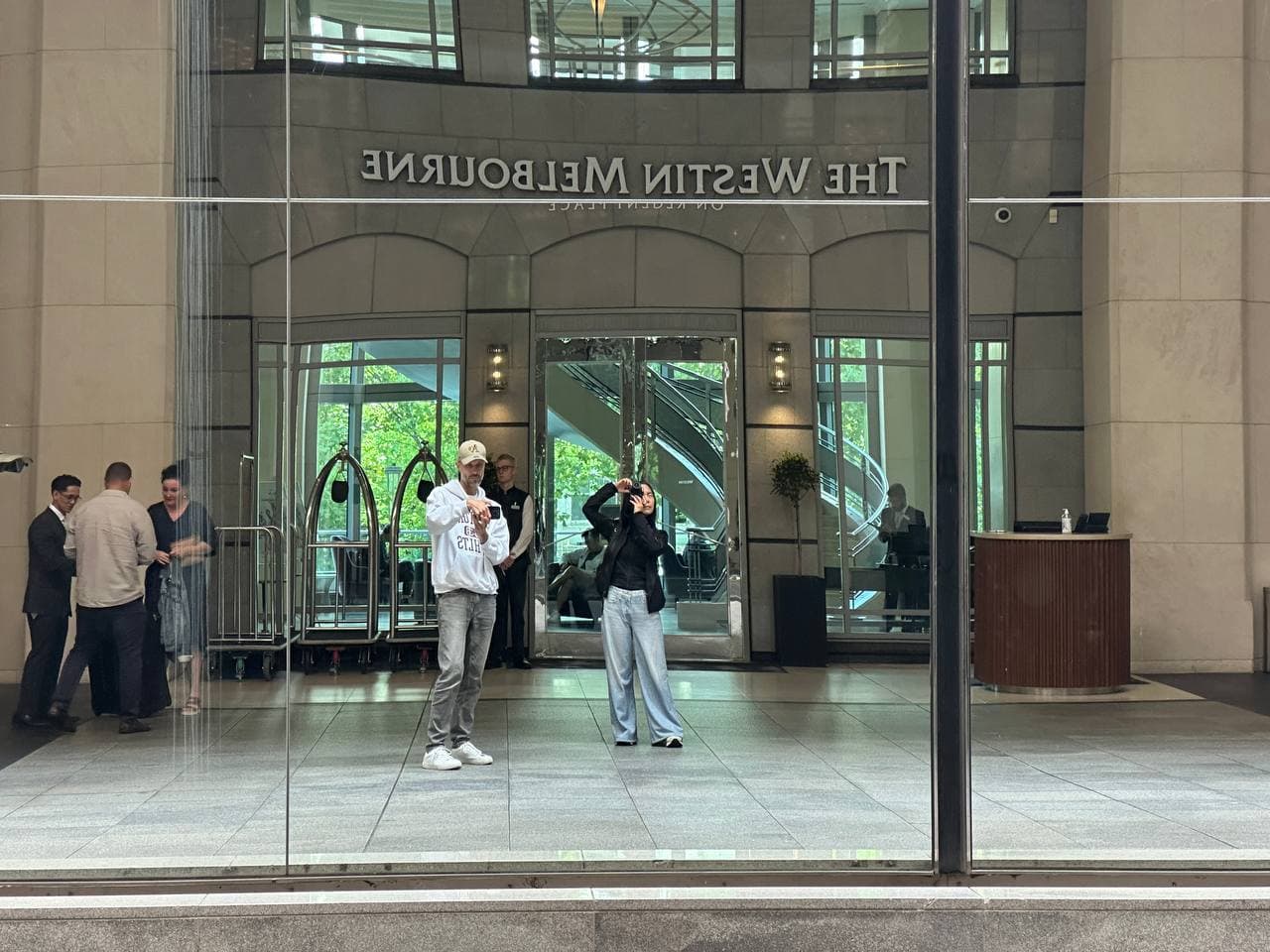
The Westin Melbourne entrance. Reflections are everywhere once you start looking.
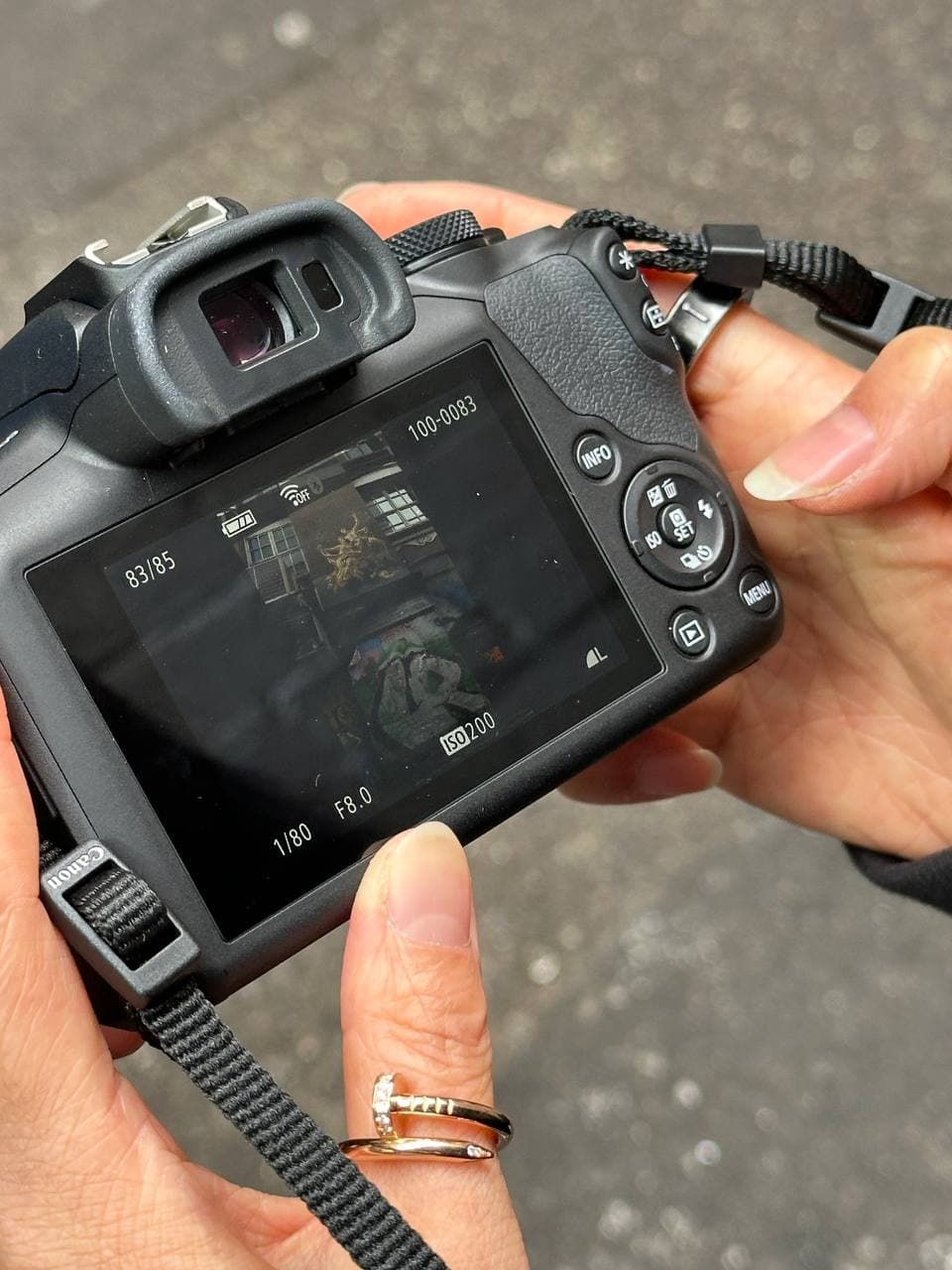
1/80s, f/8.0, ISO 200. Full manual. Melbourne CBD laneways.
The Result: Full Manual Mode on a Kit Lens
Towards the end of the session, Janet was running the camera on her own. Moving from a bright street into a dark laneway, she'd bump the ISO without hesitation. She'd see a subject and choose her aperture based on whether she wanted the background sharp or soft. She wasn't thinking about it as three separate settings anymore. It was just one decision: how do I want this photo to look?
That's manual mode. And she did it on a $700 kit from the box. The camera didn't hold her back. It never does. What holds people back is not understanding how the three settings connect.
The Canon R100 for Beginners
The R100 is Canon's cheapest mirrorless. People sometimes feel weird about that, like they should have spent more. But it uses the same RF lens mount as Canon's top-end bodies, so you can upgrade the glass later without switching systems. The kit lens is fine for learning. It's not going to win any awards, but it doesn't need to. You're learning how light works, not entering a photo competition.
If you haven't bought a camera yet, check our beginner camera guide. If you already own an R100, stop researching upgrades and come learn how to use the one you've got.
Canon R100 Photography Course: Quick Answers
Do I need an expensive camera for the course?
No. Janet did the entire course on a Canon R100 with the kit lens that comes in the box. The variable aperture on the kit lens actually makes it easier to understand what aperture does because you can watch it change as you zoom. Expensive gear is not the bottleneck. Understanding is.
Is the Canon R100 good enough to learn on?
More than good enough. It has full manual controls, an RF lens mount you can grow into, and it's light enough to carry for 3 hours without getting tired. The grain at high ISO is more obvious than on pricier cameras, but that actually helps when you're learning what ISO does.
How does the course work?
3 hours walking Melbourne CBD with Daniel Bilsborough. You learn shutter speed, aperture, and ISO one at a time, practicing each one on the street until it makes sense before adding the next. $499, max 2 students. You bring your camera, any brand.
What Janet Learned
- Shutter speed controls motion: fast freezes, slow blurs
- Aperture controls background blur, and on a kit lens it shifts when you zoom
- ISO adds brightness but the grain gets obvious on the R100 past 800
- The kit lens is fine. Stop worrying about gear and start learning settings.
- Once you start seeing reflections and framing, you can't unsee them
Janet apologised for her camera at the start of the session. By the end she was spotting reflections on her own and adjusting exposure on the fly. The R100 didn't hold her back for a second. If you've been putting off learning because you think your gear isn't good enough, it is. Come and find out. Or read about Joseph's session with a Canon R8 for a different camera, same result.
Your Turn
The DSLR & Mirrorless Express Photography Course runs every Saturday in Melbourne CBD. Max 2 students. $499. Check our photography tips for beginners if you want a head start before you come.