Sony A7CR and Two Lenses in Melbourne's Laneways
Ron brought a Sony A7CR and two lenses to a 3-hour photography course in Melbourne CBD.
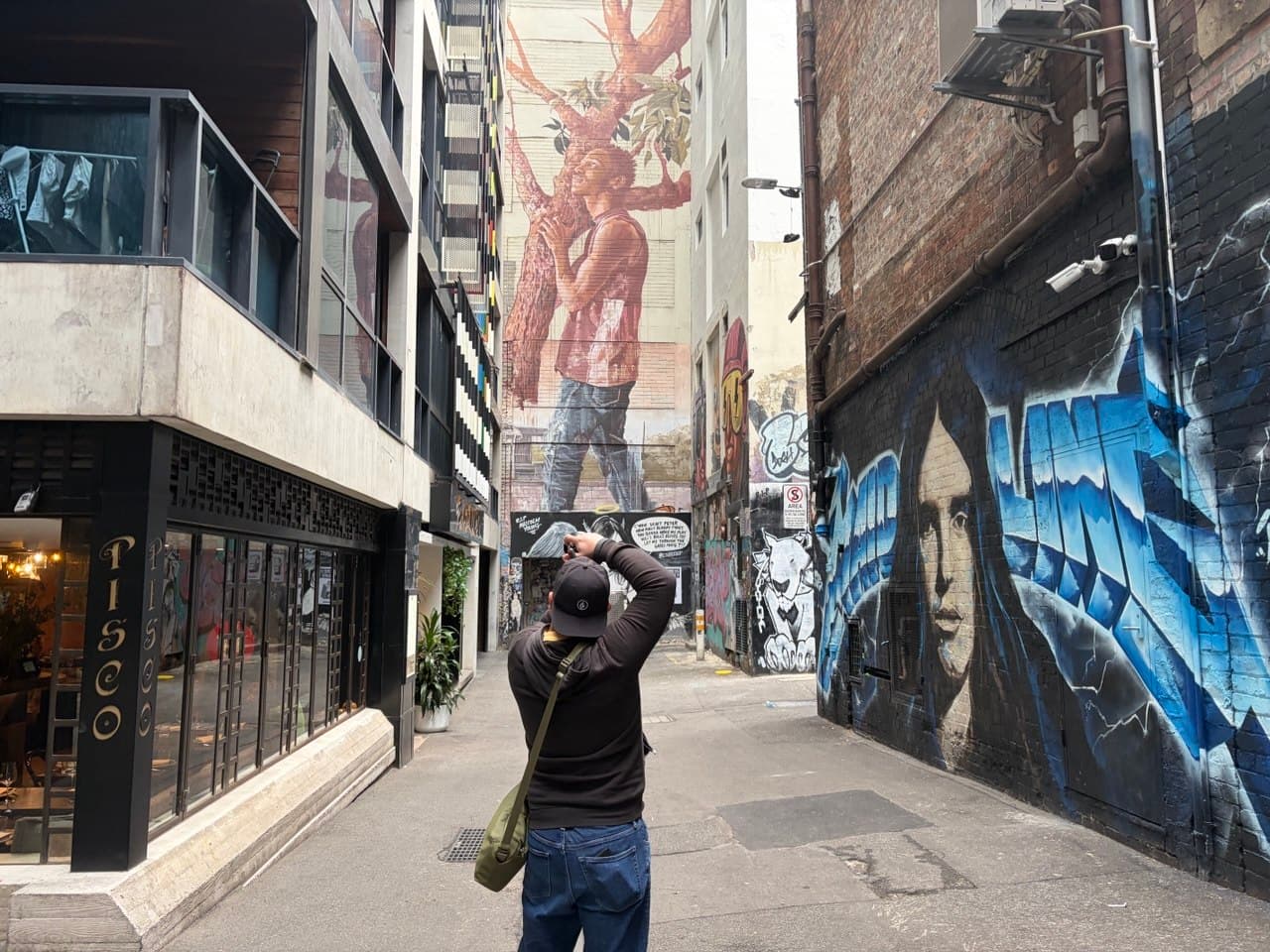
Ron lining up a shot in a Melbourne laneway with the 24-70mm f/2.8 GM II.
The Gear
Ron turned up with a Sony A7CR (approx. $3,700 AUD body-only), a 24-70mm f/2.8 GM II (approx. $2,500 AUD), and a 20mm f/1.8 G (approx. $1,200 AUD) . The A7CR is Sony's compact full-frame body with a 61-megapixel BSI CMOS sensor, 5-axis in-body stabilisation, and an E-mount. It weighs 515g body-only, which is closer in size to an APS-C body than a traditional A7-series. It's the resolution-focused sibling of the A7C II, which prioritises video and burst speed instead.
Two lenses gave the session some range. The 24-70mm GM II is Sony's top-tier zoom, sharp across the frame at f/2.8 and fast to autofocus. It covers everything from wide environmental shots to tighter compositions without swapping glass. The 20mm f/1.8 G is a wide prime that lets in more light and works well for laneways and architecture where you want to get the whole scene in. If you're still choosing a camera, our beginner camera guide covers what to look for.
Ron received the course as a gift voucher. He'd already done another one-to-one photography course in Melbourne and a lot of his own research on YouTube. He understood about half of what each setting does - he knew what aperture, shutter speed, and ISO are, but couldn't put them together in real-world shooting. He understood the exposure triangle as a concept but not how to apply it on the street.
This session was about connecting all the dots: showing Ron exactly what buttons to press on his camera, when to press them, and why. The one-setting-at-a-time method works through shutter speed, aperture, and ISO individually before combining them, which bridges the gap between knowing what the settings are and actually using them.
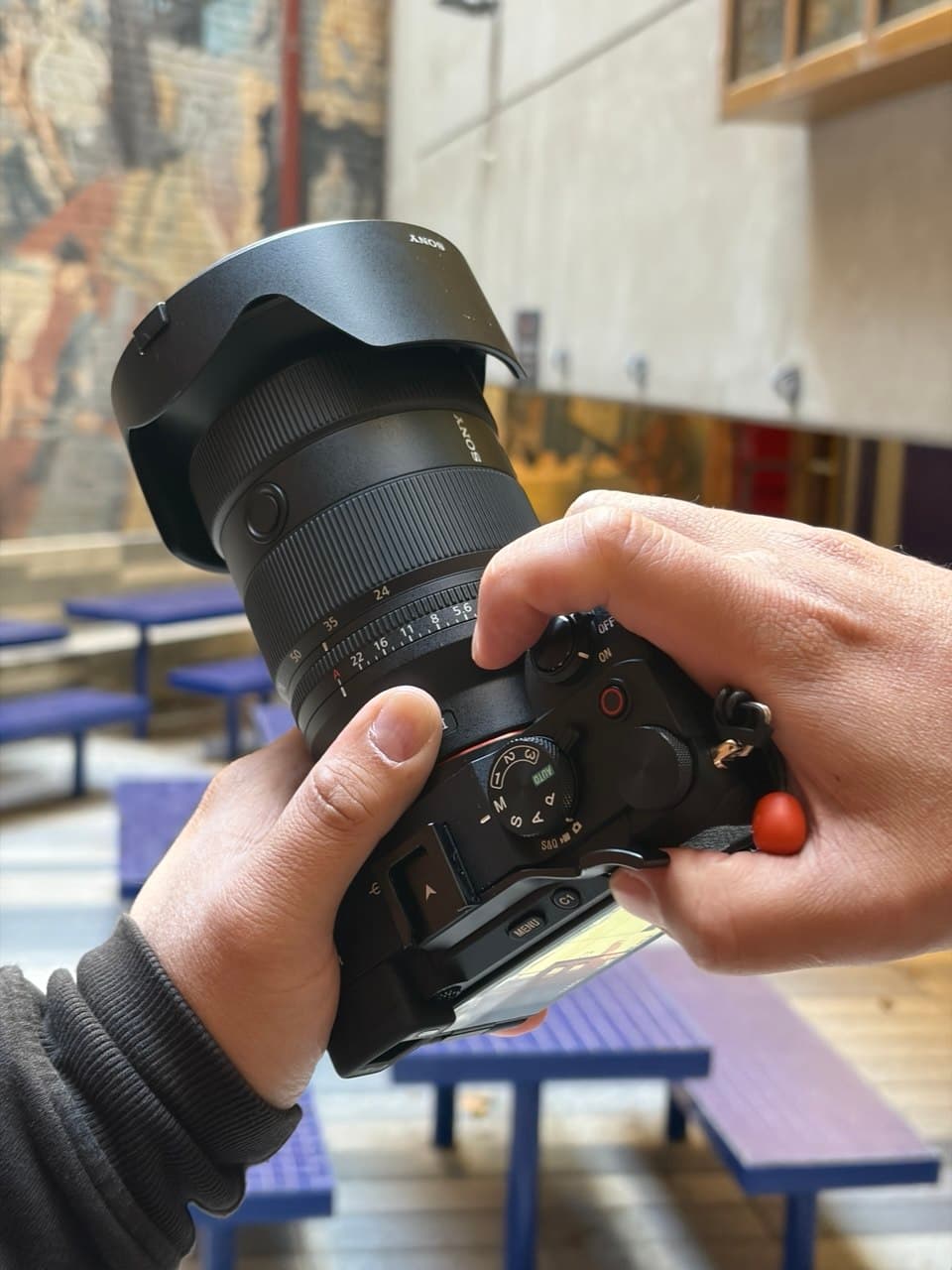
Ron's camera with the zoom mounted. Mode dial set to M.
Melbourne Laneways on a Full-Frame Sony
Melbourne's laneways are a mix of deep shadow and patches of bright sky, which makes metering tricky for street photography in Melbourne. The full-frame sensor handles this well because it holds more detail in the shadows than a crop sensor would. When you're shooting into a laneway with a bright opening at the far end, that dynamic range matters.
The LCD shot below shows one of Ron's laneway compositions. The settings visible on the screen: 1/1000s, f/3.0, ISO 800.
With 61 megapixels, the A7CR captures a huge amount of detail. That resolution becomes useful later when cropping in Lightroom or pulling detail out of shadow areas during post production.
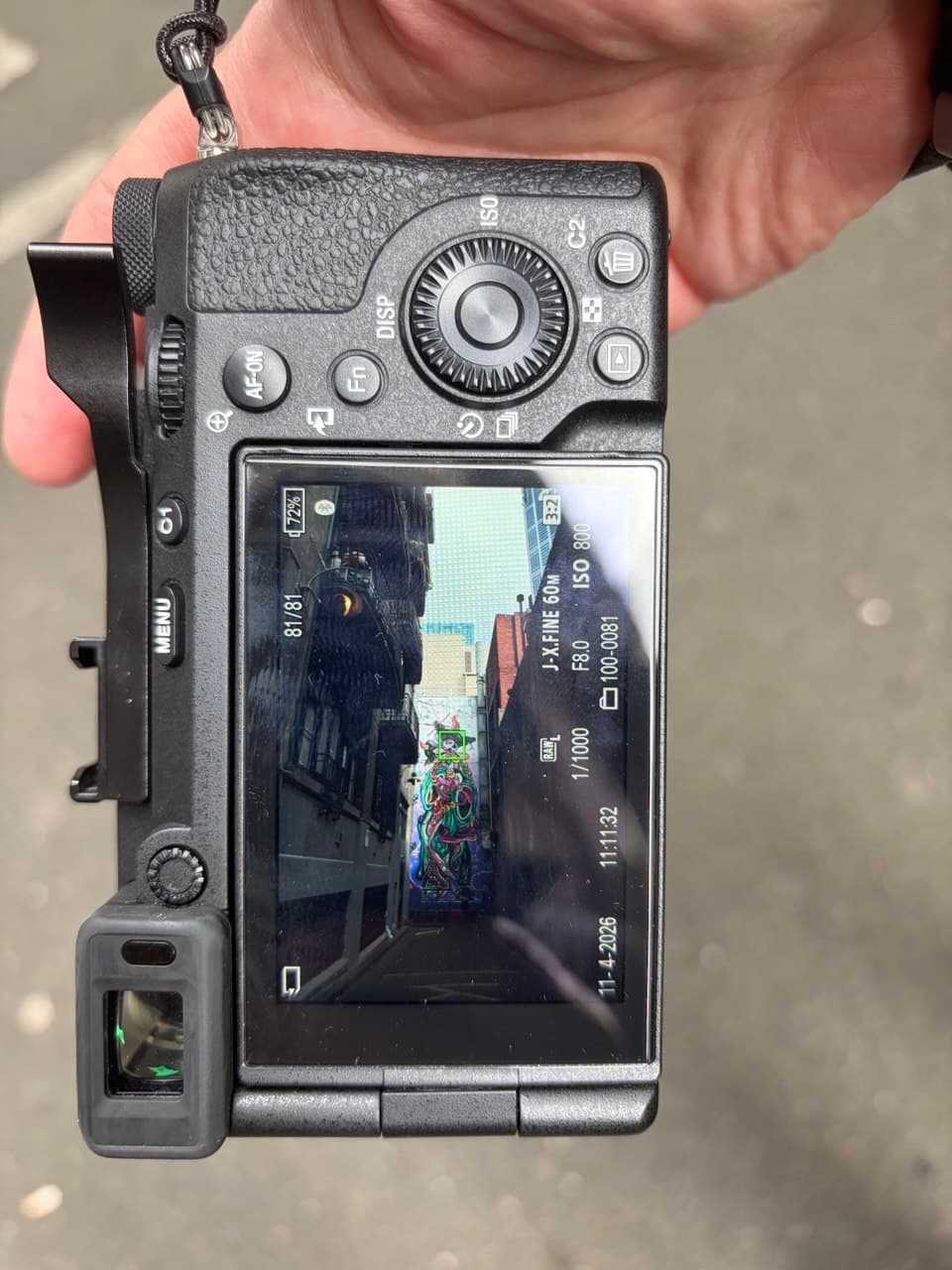
Ron's A7CR rear LCD showing a Melbourne laneway composition. Settings visible: 1/1000s, f/3.0, ISO 800.
Learning Manual Mode
Sony cameras use command dials and menus rather than dedicated physical dials for each setting. The A7CR has a mode dial on top, a front dial for one exposure variable, and a rear dial for another. Once you know which dial controls what in M mode, the adjustments are quick, but the first step is getting comfortable with the layout.
The one-setting-at-a-time method works well here. Lock two variables, change one, see what happens. On the A7CR, the live exposure preview on the EVF shows the effect of each change in real time, so you can see immediately whether bumping the ISO from 400 to 800 opens up the shadows enough or if you need to go further.
The full-frame sensor also gives more room for error with ISO. The A7CR stays clean well past ISO 3200, which means you can prioritise shutter speed in changing light without worrying about noise creeping in.
Quick Answers
Is the Sony A7CR good for street photography?
The A7CR is a 61-megapixel full-frame camera in a compact body. It's smaller than most full-frame Sonys, handles well for street shooting, and the high resolution means you can crop aggressively in post without losing detail. Pair it with the 20mm f/1.8 G for a lightweight street setup.
Can you learn manual mode on the Sony A7CR?
Sony cameras use command dials and menus rather than dedicated physical dials, but the live exposure preview in the EVF makes manual mode intuitive once you know the layout. The course covers the A7CR's specific controls and how to adjust shutter speed, aperture, and ISO without slowing down.
What lens is best for street photography on Sony A7CR?
Ron used two lenses during the session: the 24-70mm f/2.8 GM II for versatility and the 20mm f/1.8 G for wide street scenes. The 24-70mm covers most situations without swapping lenses. The 20mm is smaller, lighter, and lets in more light, which suits laneways and architecture.
How much is the photography course?
$499. Three hours in Melbourne CBD with Daniel Bilsborough. Max 2 students per session. Any camera with a manual mode.
What the Course Covers
- Full manual mode on your camera, including how to navigate your specific dial and menu layout
- Shutter speed, aperture, and ISO - what each one does and when to change it
- Reading light in real-world conditions, from open shade to bright sky
- Working with whatever lenses you bring, understanding focal length and aperture choices
- Composing shots on location in Melbourne CBD
The LCD shows 81 shots taken by 11:11am. The next step for those 61-megapixel files would be Lightroom training to develop the images from the session. See how Dam shot Melbourne's backlit streets on a Fujifilm X-T5, or how Joseph learned manual mode on a Canon R8.
Your Turn
The DSLR & Mirrorless Express Photography Course runs every Saturday in Melbourne CBD. Max 2 students. $499. Check our photography tips for beginners if you want a head start before you come.