Canon M50 Mark II and Sony a7 IV: A Melbourne Photography Course
Two students on two different systems: Elan on a full-frame Sony a7 IV, Cosette on a Canon EOS M50 Mark II, both learning manual mode over three hours across Melbourne CBD and out over the Yarra.
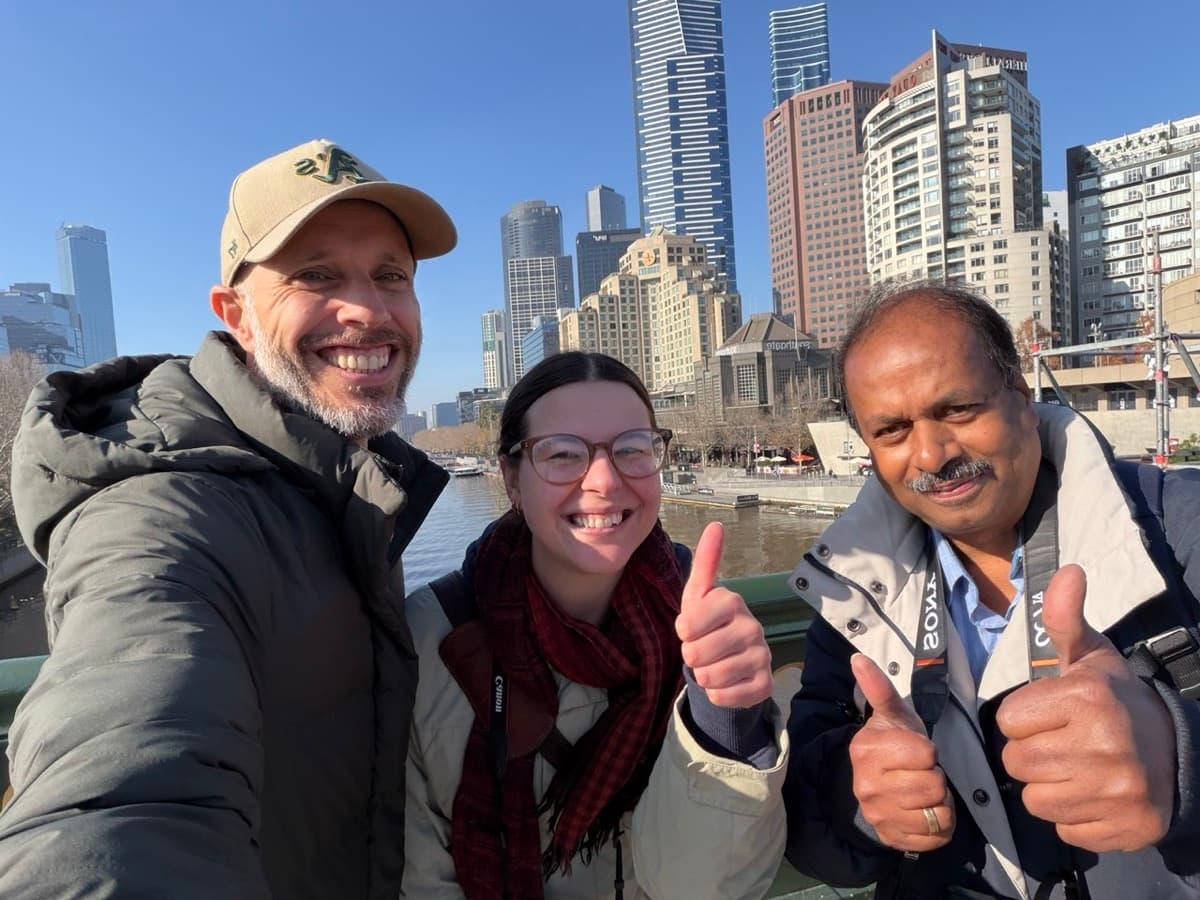
Elan, Cosette, and Daniel over the Yarra, with the Southbank skyline behind.
The Two Cameras: Canon M50 Mark II and Sony a7 IV
This session had two students on two different systems. Elan shot a Sony a7 IV with a FE 24-105mm f/4 G, a 33-megapixel full-frame body paired with a versatile zoom that covers wide scenes through to tighter portraits without swapping lenses. Cosette shot a Canon EOS M50 Mark II with the EF-M 15-45mm kit lens, a compact 24.1-megapixel APS-C mirrorless body with a vari-angle touchscreen.
The two cameras sit at different ends of the mirrorless range, which made for a useful session. A full-frame sensor gathers more light and holds more detail in shadow; a compact APS-C body like the M50 Mark II is lighter to carry all day and quick to handle. Both shoot full manual the same way once you know where the controls live. If you're still choosing a camera, our beginner camera guide covers what to look for.
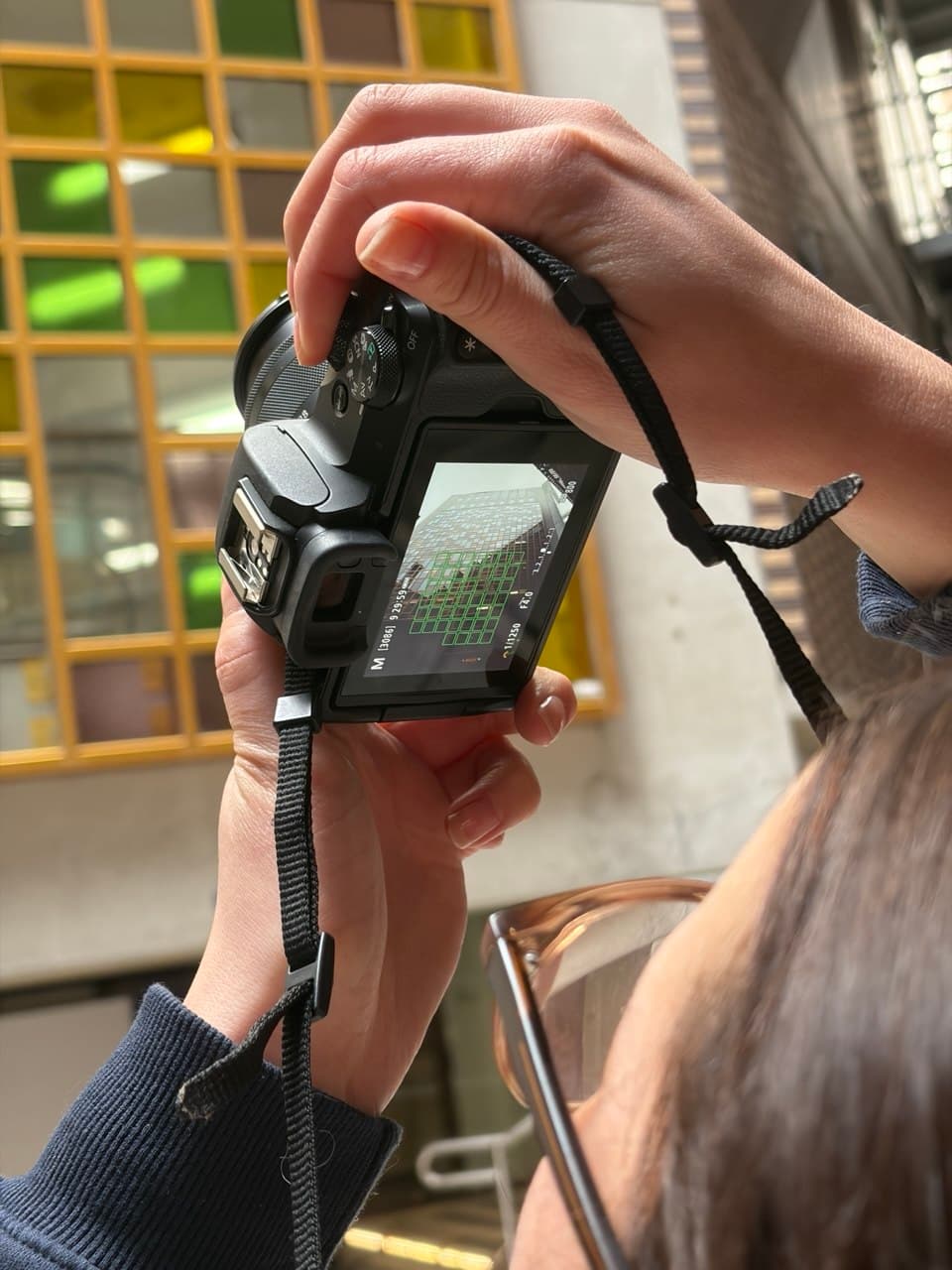
Cosette's Canon EOS M50 Mark II, mode dial on M, composing a shot.
Manual Mode on Two Different Bodies
The Canon and the Sony get to manual mode by slightly different routes. The M50 Mark II has a mode dial with a dedicated M position, and its touchscreen lets you tap straight to shutter speed, aperture, and ISO. The a7 IV uses a front and rear command dial plus a menu system, with a live exposure preview in the electronic viewfinder that shows the effect of each change before you take the shot.
The method works the same on either. Lock two of the three settings, change one, and watch what happens to the photo. Working through shutter speed, aperture, and ISO individually is how the exposure triangle turns from a diagram into something you adjust without thinking.
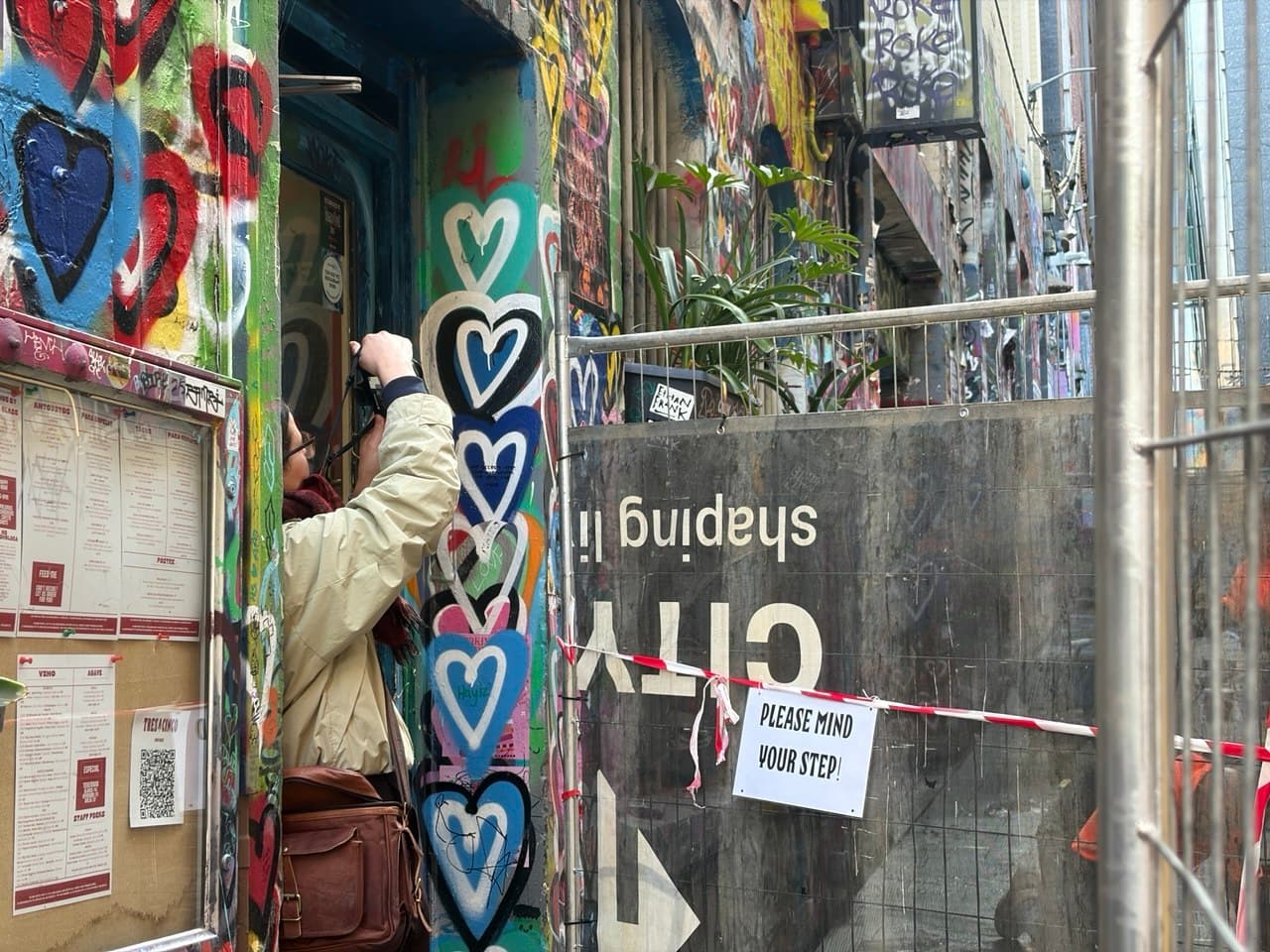
Cosette working a street-art laneway with the M50 Mark II.
Three Hours Through Melbourne CBD
The session moves through the city as it shoots. Melbourne's laneways bring deep shadow next to bright openings, which is good practice for reading light and setting exposure by hand. Street art, trams, and the brick-and-render facades along the streets each ask for a different focal length and a different exposure, so the settings change as the subjects do.
That mix of subjects across one walk is deliberate. After setting exposure for a shaded laneway, a tram in open sun, and a building against the sky, the adjustments start to feel routine.
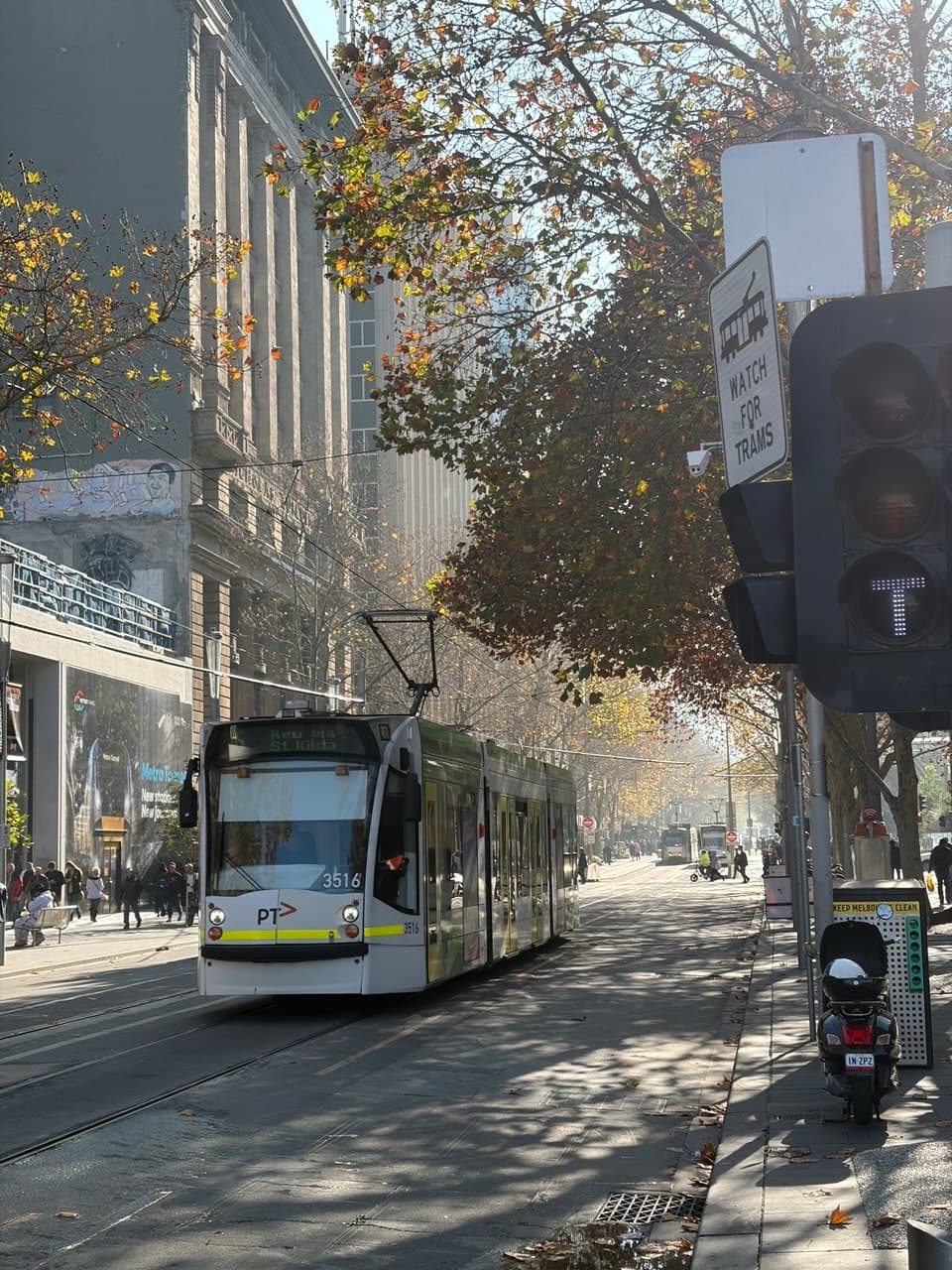
A tram in open sun on a CBD street.
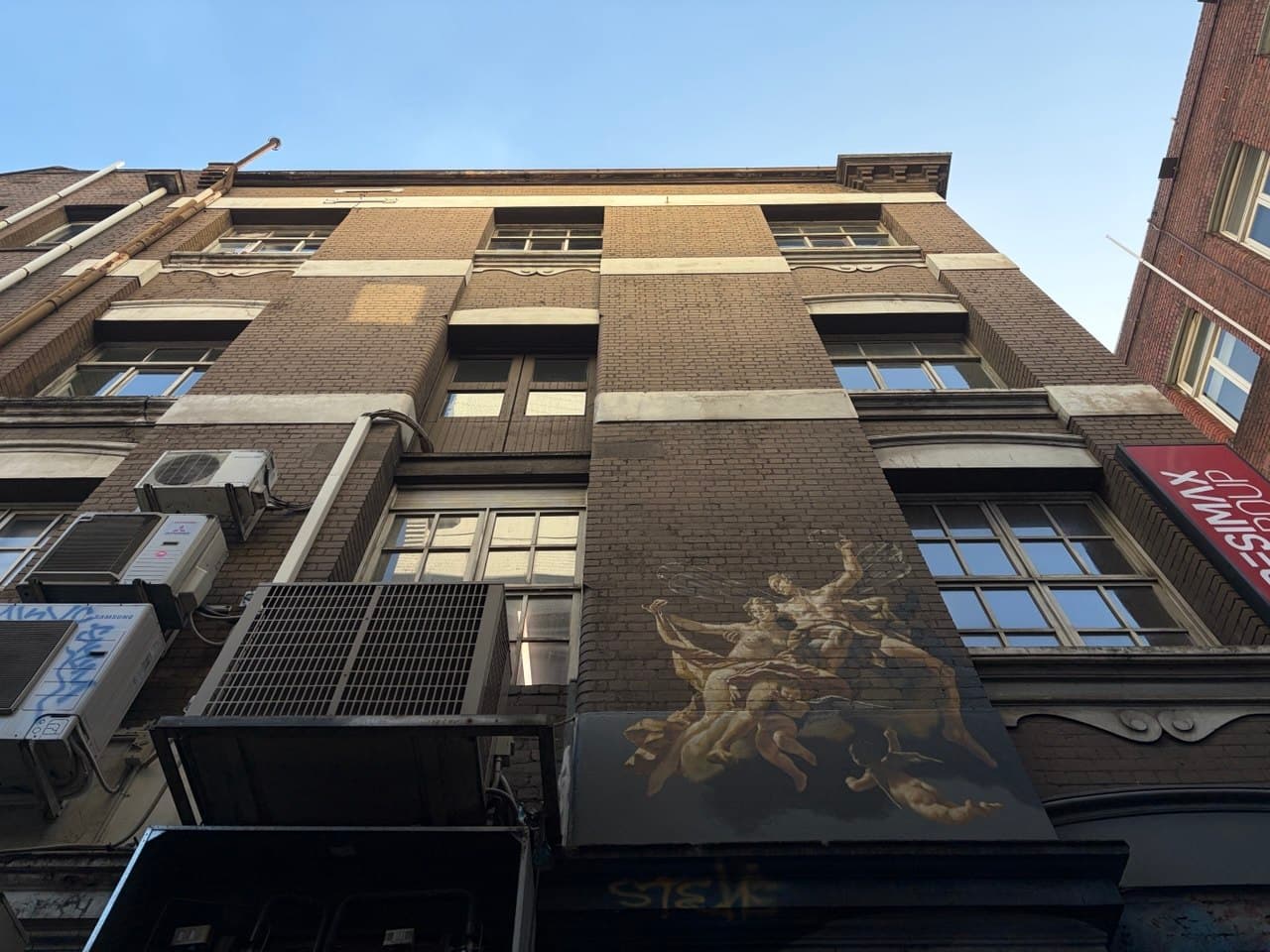
A painted facade, shot looking up against the sky.
Canon M50 Mark II and Sony a7 IV: Quick Answers
Is the Canon EOS M50 Mark II good for beginners?
It's perfect for beginners, compact and cute. The M50 Mark II is a 24.1-megapixel APS-C mirrorless camera with a compact body, a vari-angle touchscreen, and the EF-M mount. It's light, approachable, and the touchscreen makes changing settings straightforward. The kit 15-45mm covers wide to short-telephoto, which is enough to learn full manual mode on. The mode dial has a dedicated M position.
Can you learn manual mode on the Sony a7 IV?
Yes. The a7 IV uses a front and rear command dial plus menus rather than a dedicated dial for each setting, and the electronic viewfinder shows a live exposure preview, so you see the effect of each change before you press the shutter. The course covers your specific body's dial and menu layout so adjusting shutter speed, aperture, and ISO doesn't slow you down.
Can two people do the photography course together?
Yes. Sessions are capped at two students, so two people can book the same session and shoot side by side, each on their own camera. Elan and Cosette did exactly that, on a Sony a7 IV and a Canon EOS M50 Mark II.
What's the difference between learning manual mode on a full-frame and an APS-C camera?
The settings are identical; the sensor size only changes the trade-offs. A full-frame body like the Sony a7 IV gathers more light and holds more detail in shadow, which helps in mixed light. An APS-C body like the Canon EOS M50 Mark II is smaller and lighter to carry for three hours, and its crop factor gives a little extra reach from the same lens. Manual mode works the same way on either.
What the Course Covers
- Full manual mode on your own camera, including your specific dial and menu layout
- Shutter speed, aperture, and ISO - what each one does and when to change it
- Reading light in real conditions, from shaded laneways to open sun
- Working with whatever lens you bring, and what focal length and aperture to reach for
- Composing shots on location across Melbourne CBD
The files from a session like this are where the work starts. The next step is developing them in Lightroom. You can also see how Joseph learned manual mode on a Canon R8 , or how Ron shot Melbourne's laneways on a Sony A7CR, or how Janet learned manual mode on a Canon R100 and the kit lens, or how Megan and Sage shot a Fujifilm X-T30 III and a medium-format GFX 50S.
Your Turn
The DSLR & Mirrorless Express Photography Course runs on Fridays or Saturdays in Melbourne CBD. Max 2 students. $499. Check our photography tips for beginners if you want a head start before you come.