A Fujifilm X-T30 III and a GFX 50S on a Melbourne Photography Course
Megan's Fujifilm X-T30 III and Sage's medium-format GFX 50S sit at opposite ends of the Fuji range, and both got three hours of manual mode across Melbourne CBD.
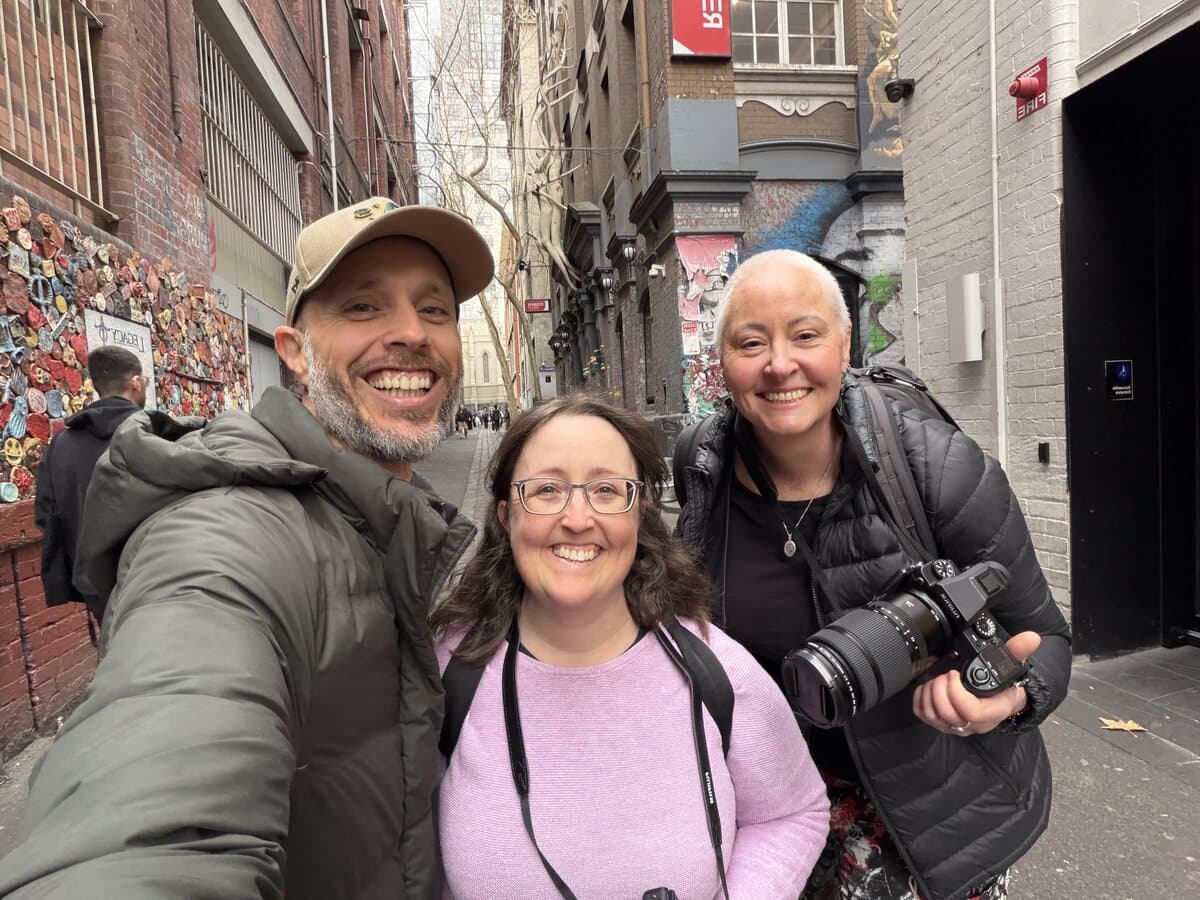
Daniel with Megan and Sage partway through the session, deep in a Melbourne CBD laneway.
The Two Cameras: Fujifilm X-T30 III and GFX 50S
This session had two students on two Fujifilm bodies from opposite ends of the range. Megan shot a Fujifilm X-T30 III with the XC 15-45mm kit lens, a compact APS-C camera that is light to carry and quick to handle. Sage shot a Fujifilm GFX 50S with a GF 45-100mm f/4, a 51-megapixel medium-format body built around a sensor larger than full frame. Both are Fujifilm bodies, so they share Fujifilm's film simulation colour profiles, and the JPEGs carry that look straight out of camera.
The two cameras sit a long way apart on paper. The GFX 50S writes a bigger file off a larger sensor; the X-T30 III is a fraction of the size and weight and slips into a jacket pocket. Both reach full manual the same way once you know where the controls live, which is what the three hours are for. If you're still choosing a camera, our beginner camera guide covers what to look for.
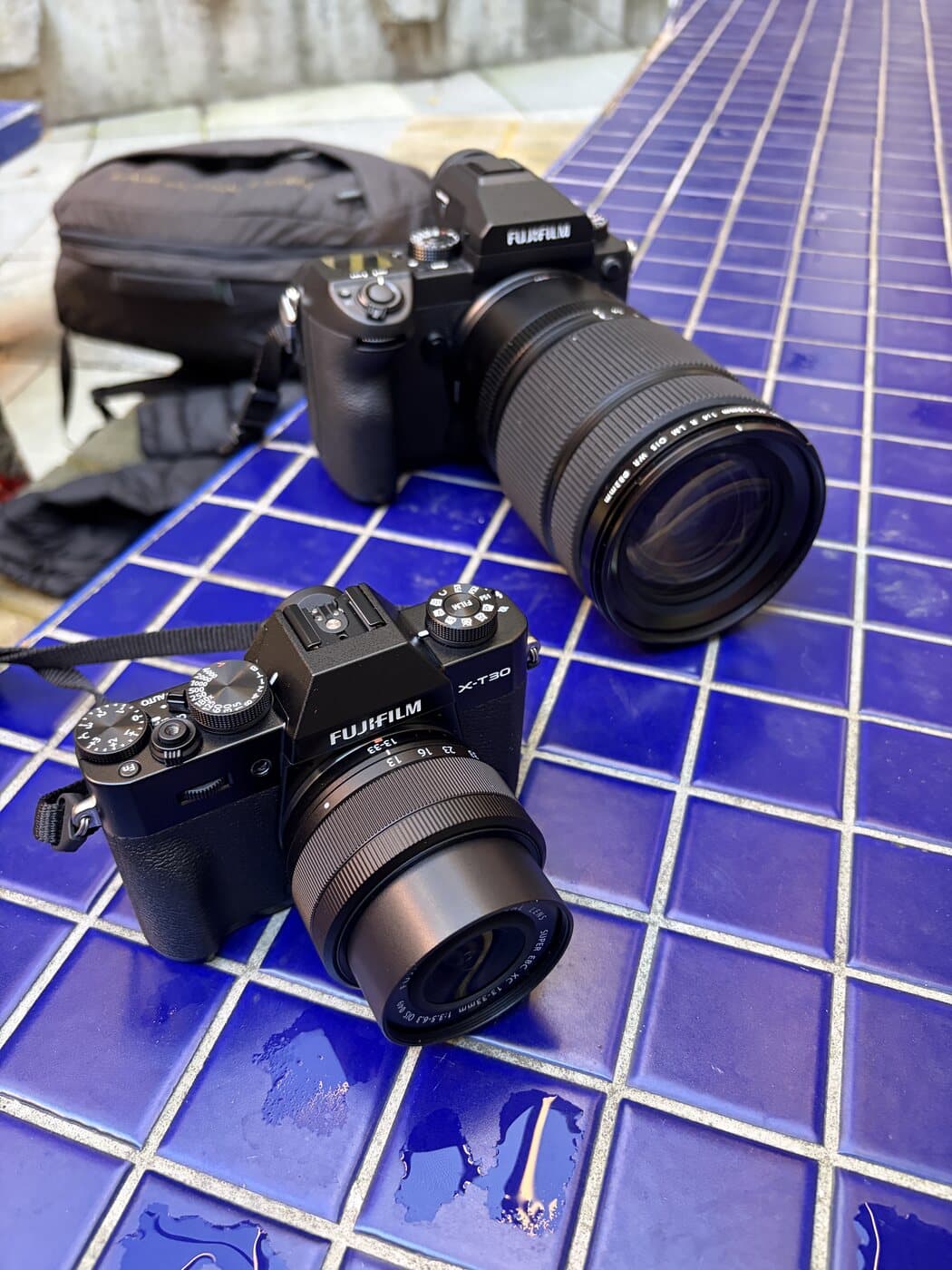
Megan's X-T30 III with the 15-45mm, and Sage's medium-format GFX 50S with the 45-100mm.
Manual Mode on APS-C and Medium Format
Fujifilm puts the main exposure controls on physical dials, so both cameras get to manual mode by a similar route. Shutter speed sits on a top dial, aperture on the lens, and ISO on a dial or in the menu depending on the body. The X-T30 III and the GFX 50S share that layout, so the handling carries from the small camera to the big one.
The method works the same on either. Lock two of the three settings, change one, and watch what it does to the photo. Working through shutter speed, aperture, and ISO individually is how the exposure triangle turns from a diagram into something you adjust by feel. Megan's X-T30 III spent part of the afternoon at 1/640, f/4, ISO 800; the numbers move as the light does.
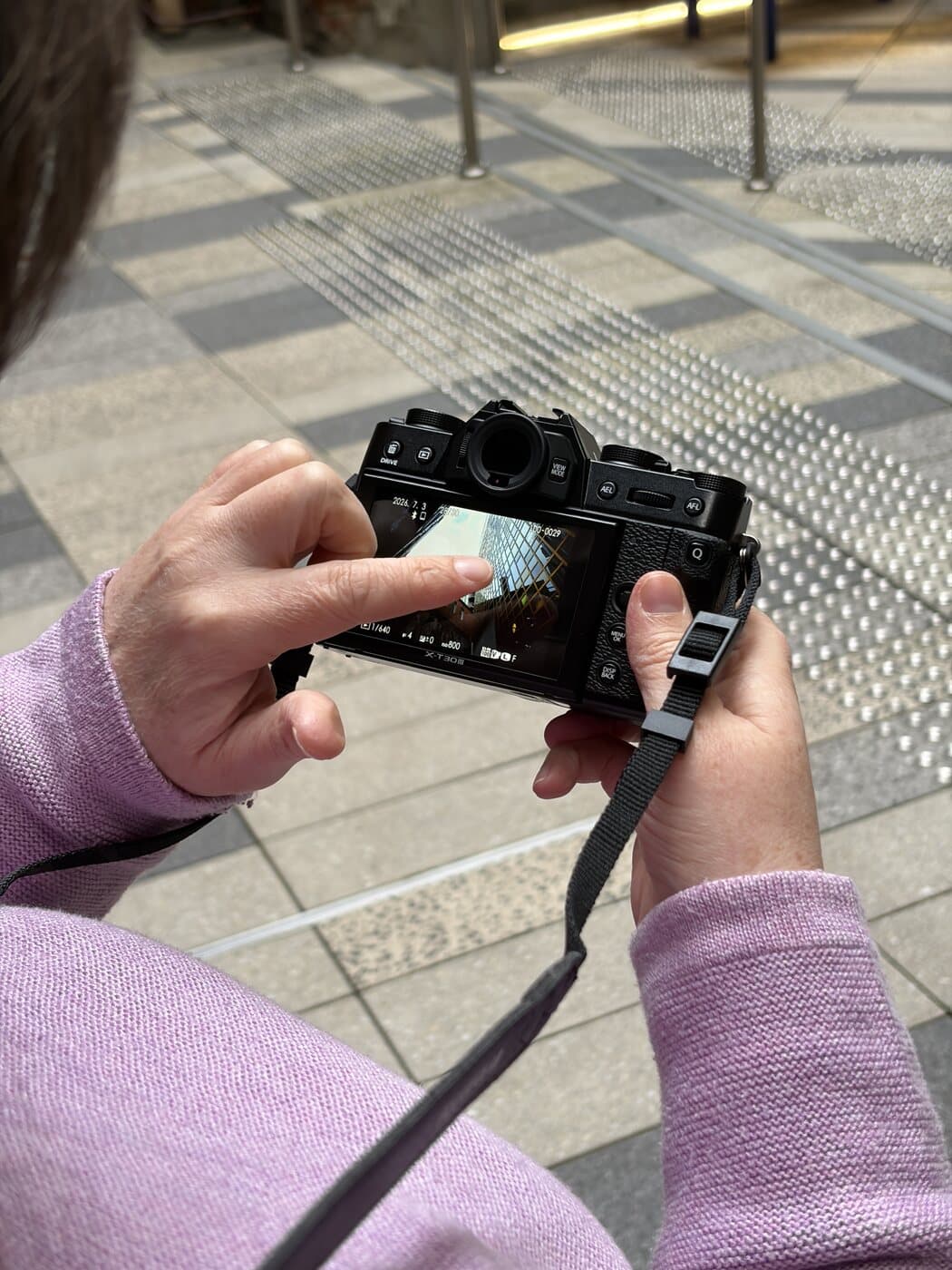
Megan's Fujifilm X-T30 III on the back screen, mid-session at 1/640, f/4, ISO 800.
Three Hours Through Melbourne CBD
The session moves through the city as it shoots. Melbourne's laneways put deep shadow next to bright openings, which is good practice for reading light and setting exposure by hand. Street art, brick facades, and the arches of a grand CBD arcade each ask for a different focal length and a different exposure, so the settings change as the subjects do.
That mix across one walk is deliberate. After setting exposure for a shaded laneway, a mural in flat light, and a long arched walkway running off into the dark, the adjustments start to feel routine.
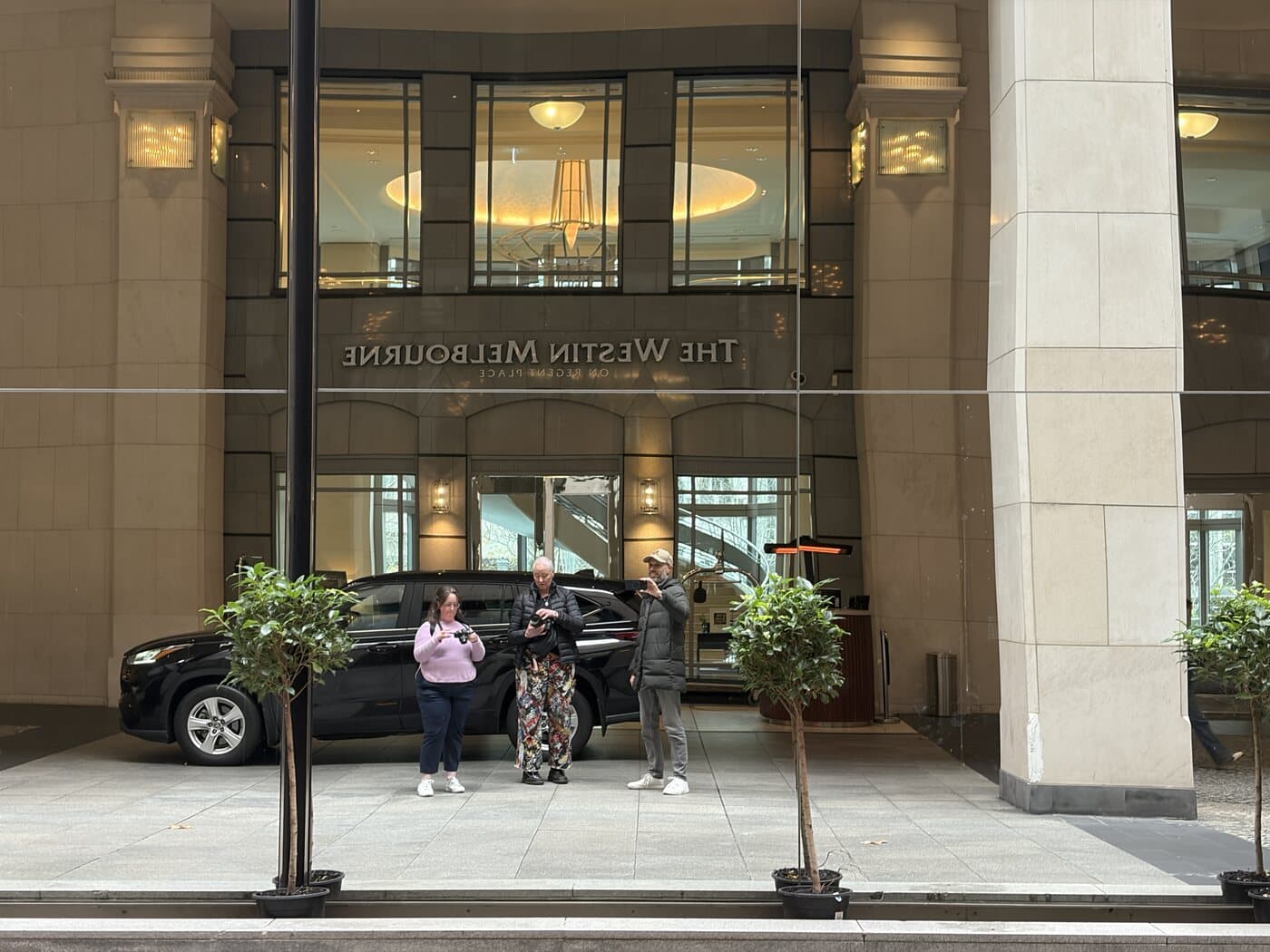
A reflection to shoot: the three of us in the mirrored facade of The Westin Melbourne.
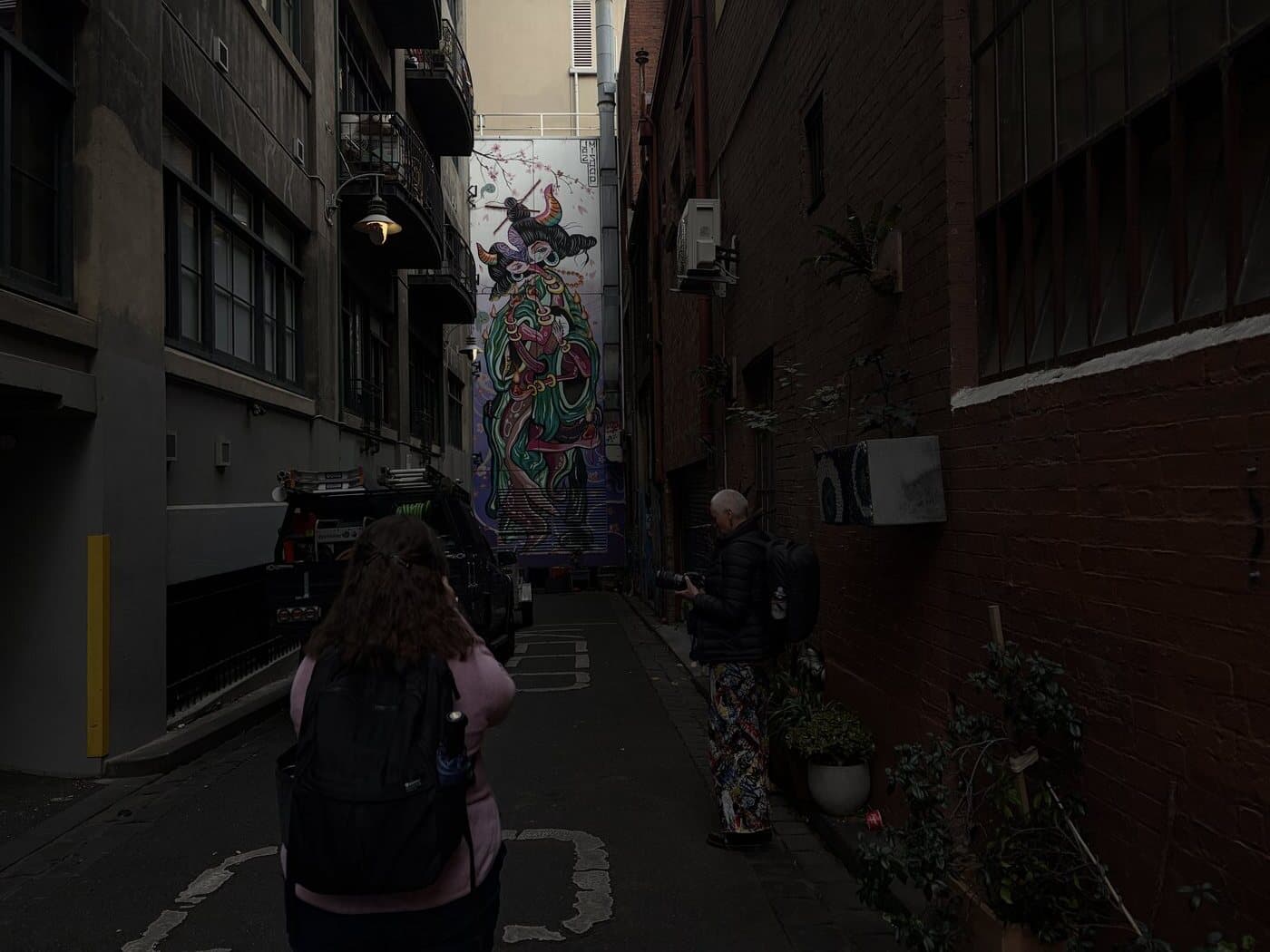
Sage working a laneway mural on the GFX 50S.
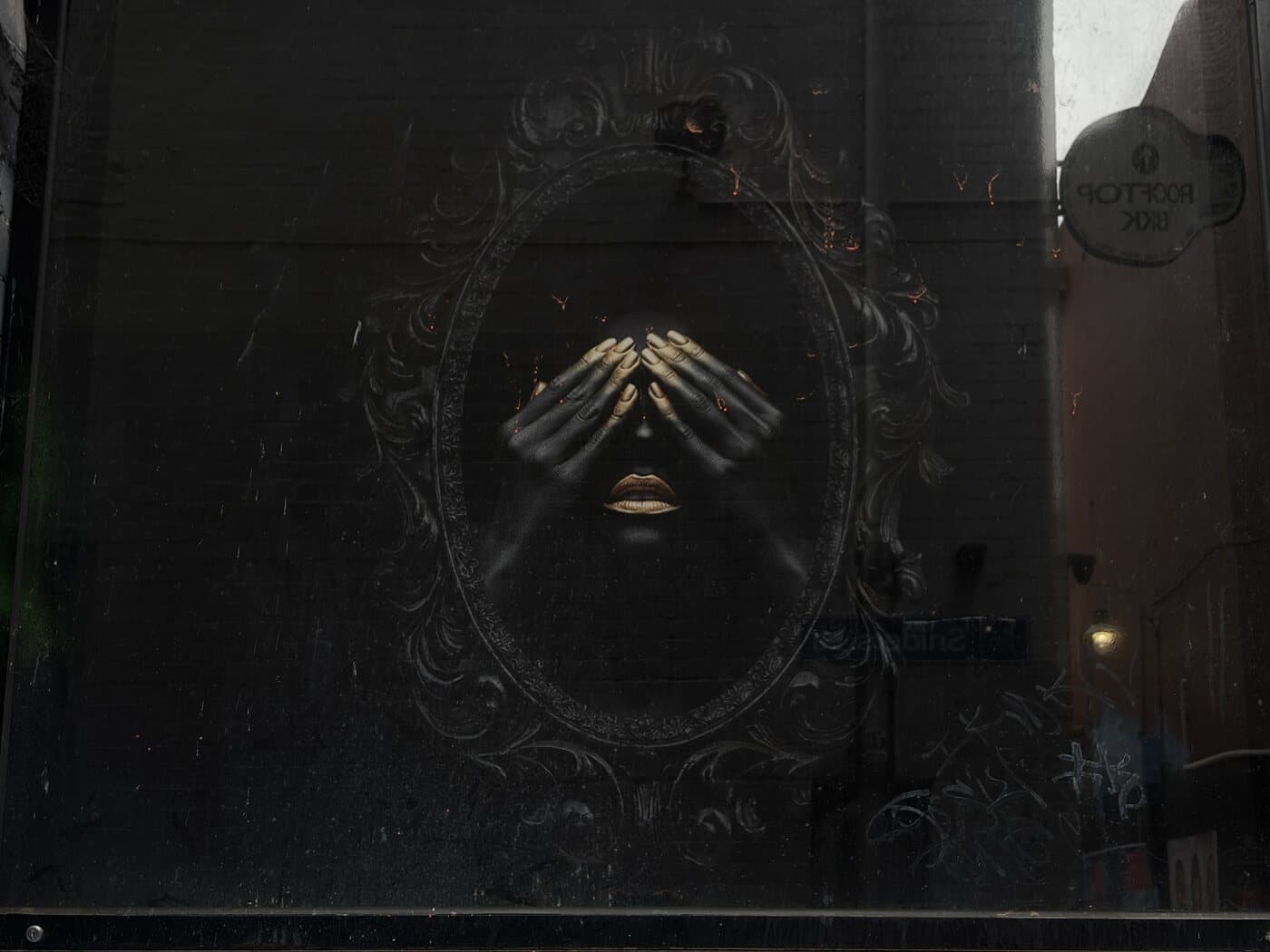
A painted shopfront in the same laneway, one of the walk's subjects.
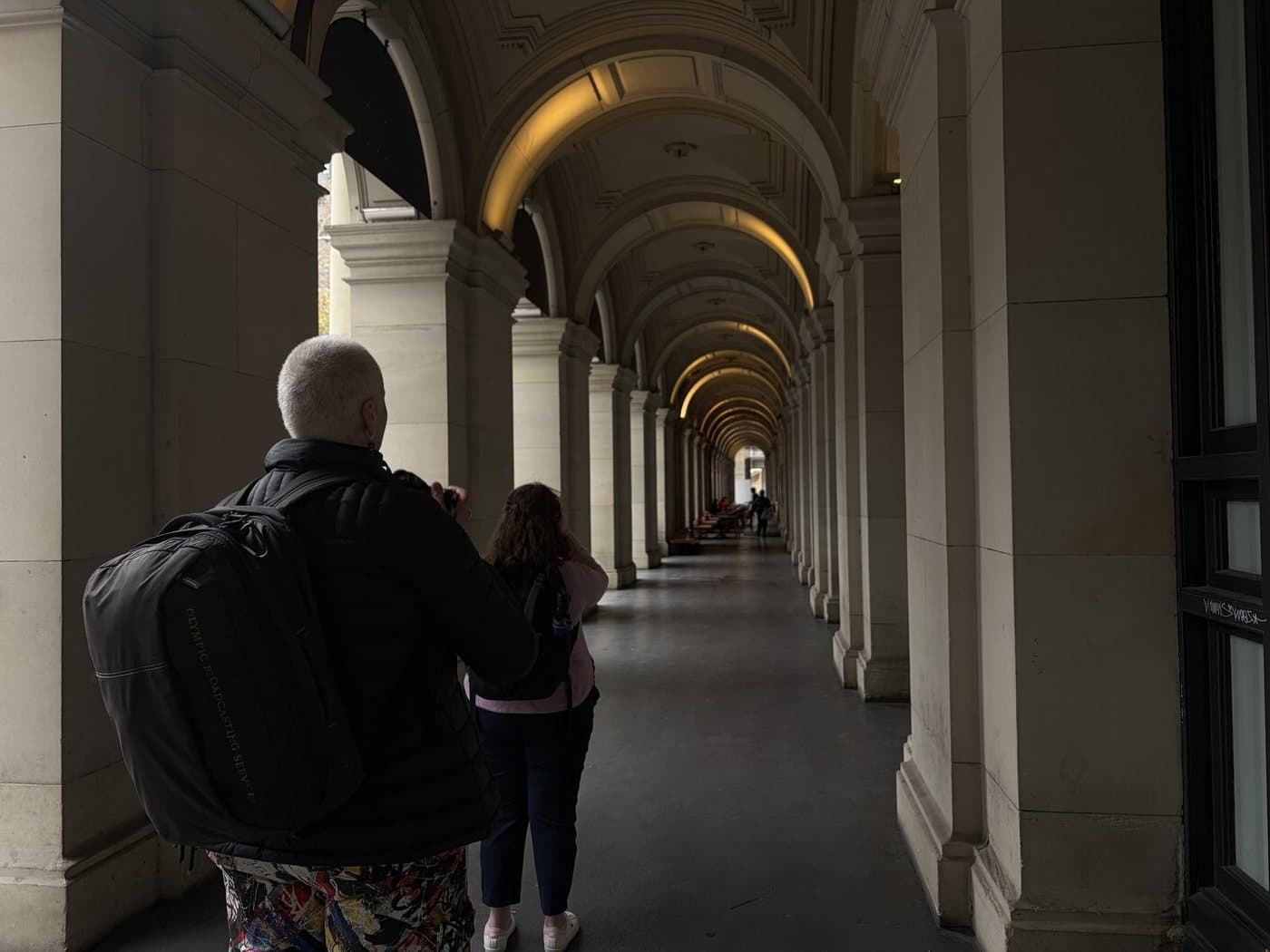
Shooting down a grand CBD arcade, a run at leading lines in low light.
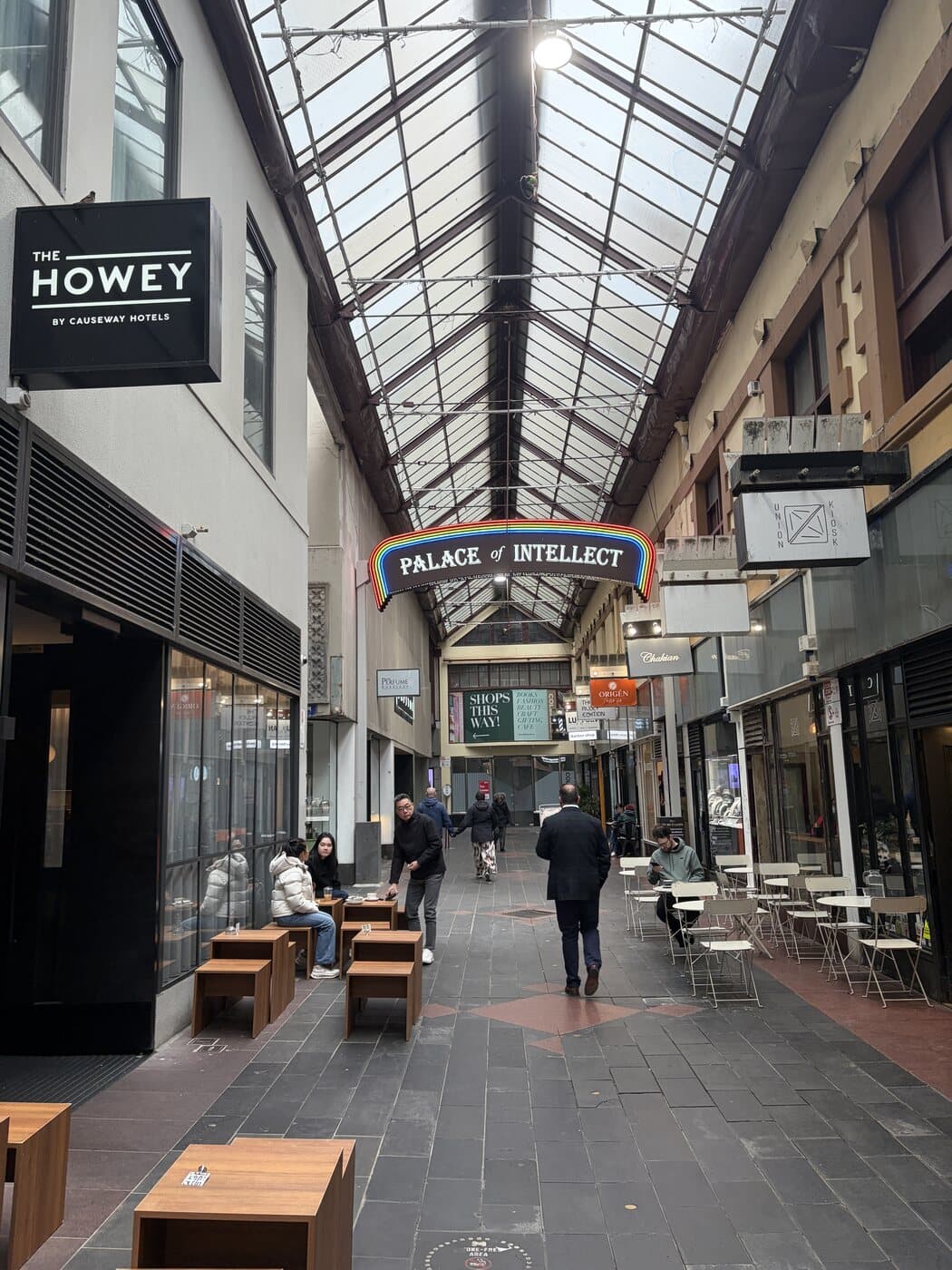
A glass-roofed CBD arcade, the kind of even overhead light that changes how you meter.
Fujifilm X-T30 III and GFX 50S: Quick Answers
Is the Fujifilm X-T30 III good for beginners?
Yes. The X-T30 III is a compact APS-C Fujifilm camera with shutter speed, aperture, and ISO on physical dials, which makes the settings easy to see and change while you learn. The XC 15-45mm kit lens covers wide through to short-telephoto, which is enough to shoot full manual mode on. It's small and light, so it's comfortable to carry for a three-hour walk.
Can you learn manual mode on a Fujifilm GFX 50S?
Yes. The GFX 50S is a 51-megapixel medium-format Fujifilm body, and it reaches manual mode through the same dial-based controls as the smaller X-series cameras. The larger sensor changes depth of field and file size, not the way you set exposure. The course covers your body's dial and menu layout so shutter speed, aperture, and ISO don't slow you down.
What's the difference between learning on APS-C and medium format?
The settings are identical; the sensor size changes the trade-offs. A medium-format body like the GFX 50S records very large files and renders a shallower depth of field at the same aperture, and it's heavier to carry. A compact APS-C body like the X-T30 III is lighter for a long walk and quicker to handle. Manual mode works the same way on both.
Can two people do the photography course together?
Yes. The DJB Photography School course in Melbourne is capped at two students, so two people can book the same session and shoot side by side, each on their own camera. Megan and Sage did exactly that, on a Fujifilm X-T30 III and a medium-format GFX 50S.
What the Course Covers
- Full manual mode on your own camera, including your specific dials and menu layout
- Shutter speed, aperture, and ISO - what each one does and when to change it
- Reading light in real conditions, from shaded laneways to open sun
- Working with whatever lens you bring, from a kit zoom to a medium-format zoom
- Composing shots on location across Melbourne CBD
The files from a session like this are where the work starts. The next step is developing them in Lightroom. You can also see how Dam shot Melbourne's backlit streets on a Fujifilm X-T5, how Elan and Cosette worked a Sony a7 IV and a Canon M50 Mark II, or how Ron shot the laneways on a Sony A7CR.
Your Turn
The DSLR & Mirrorless Express Photography Course runs on Fridays or Saturdays in Melbourne CBD. Max 2 students. $499. Check our photography tips for beginners if you want a head start before you come.