A Fujifilm X-S20 and the Kit Lens on a Beginner Photography Course in Melbourne
A first manual mode session on a Fujifilm X-S20 with the XC 15-45mm kit lens, through the laneways of Melbourne CBD on a bright October morning.
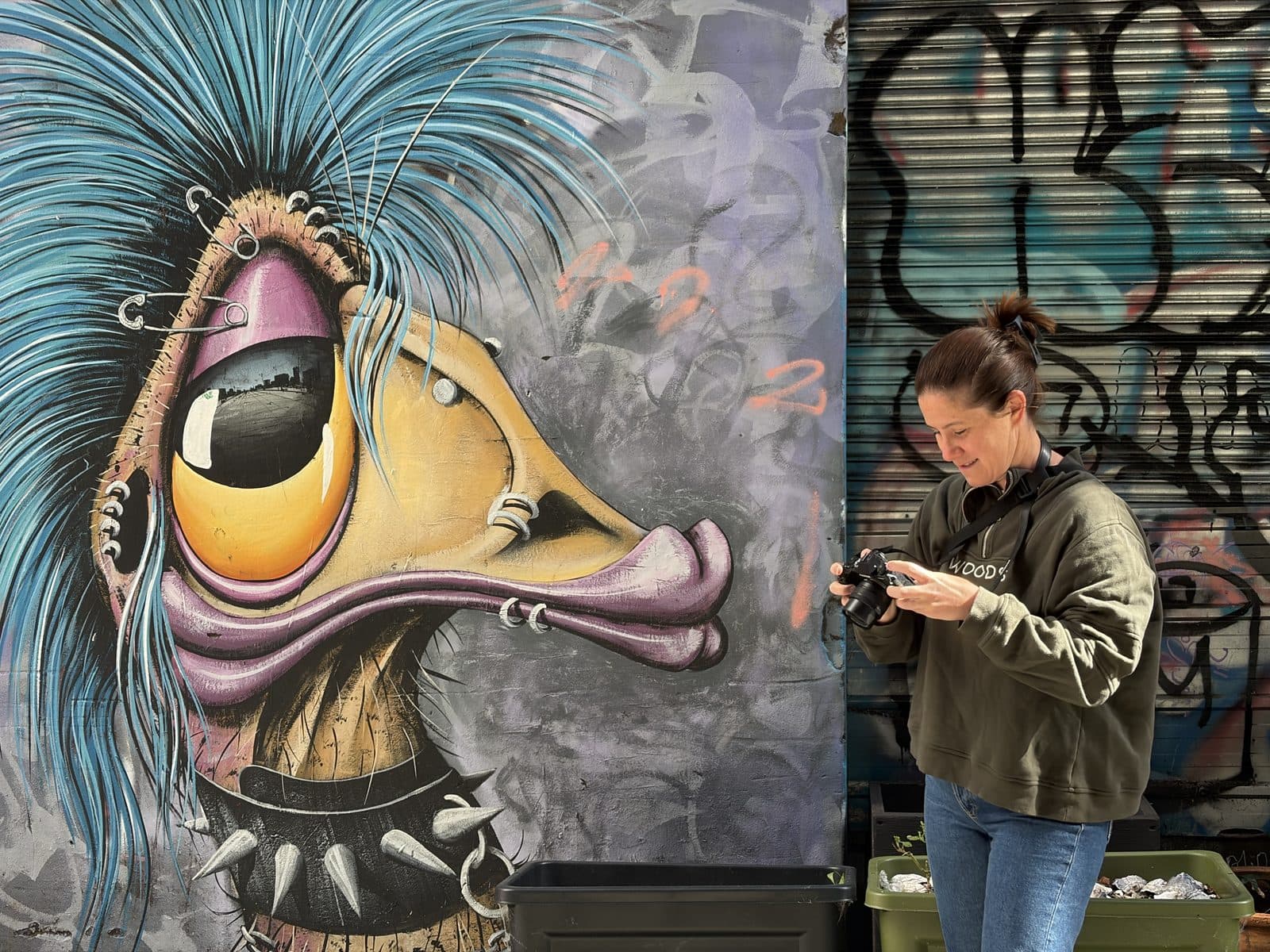
Eliza checking a frame on the X-S20 next to the blue-crested mural, Melbourne CBD.
The Gear: Fujifilm X-S20 and the XC 15-45mm Kit Lens
Eliza came along as a beginner, in her own words a very new one, with a Fujifilm X-S20 and the lens it ships with, the XC 15-45mm f/3.5-5.6 OIS PZ. That is the standard kit, exactly as it comes out of the box, and it is a good place to start a course like this.
The X-S20 is a 26-megapixel APS-C mirrorless body with in-body stabilisation, a deep handgrip, and a mode dial marked P, A, S and M along with four custom slots. Where the X-T series puts shutter speed and ISO on dedicated dials, the X-S20 uses a front and a rear command dial, so it handles much like a Canon or Nikon of the same size. It takes the large NP-W235 battery, which gets you through a three-hour morning without thinking about it.
The 15-45mm covers roughly 23mm to 69mm in full-frame terms, so it goes from wide enough for a laneway wall to a modest short telephoto. It is a power zoom, meaning the zoom ring drives a motor rather than moving the glass directly, and the lens retracts into itself when the camera is switched off. It has optical stabilisation of its own and no aperture ring, which matters once you move to manual.
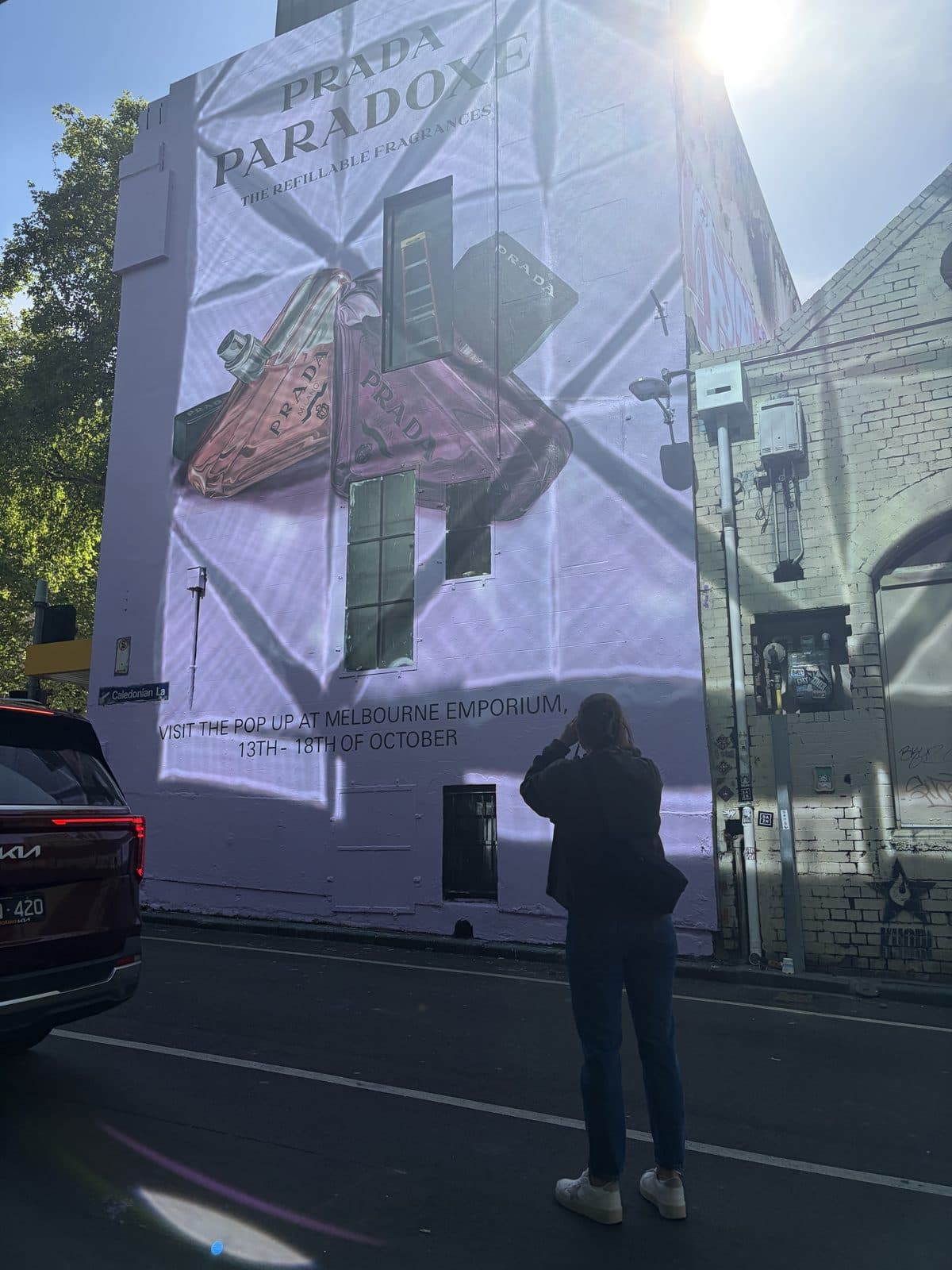
Straight into the sun. The painted wall is in shade and the sky behind it is blazing, which is the hardest light of the morning.
Manual Mode on the Fujifilm X-S20 Without an Aperture Ring
Most Fujifilm lenses carry an aperture ring, and a lot of what people say about learning on a Fuji assumes you have one. The XC 15-45mm does not. On the X-S20 the aperture lives on a command dial instead, with shutter speed on the other, and ISO a button press away. Turn the mode dial to M and all three are yours.
The f/3.5-5.6 in the lens name is worth understanding on day one. At 15mm the widest aperture available is f/3.5. Zoom out to 45mm and the widest you can open to is f/5.6, which is a bit over a stop less light. In manual mode the camera will not quietly fix that for you, so an exposure set at the wide end can come out darker after a zoom. The good news is that it shows up immediately on the screen, and the fix is a nudge of ISO or shutter speed.
That one behaviour is a useful way into the exposure triangle, because the three settings stop being a diagram the moment one of them moves on its own and you have to answer it.
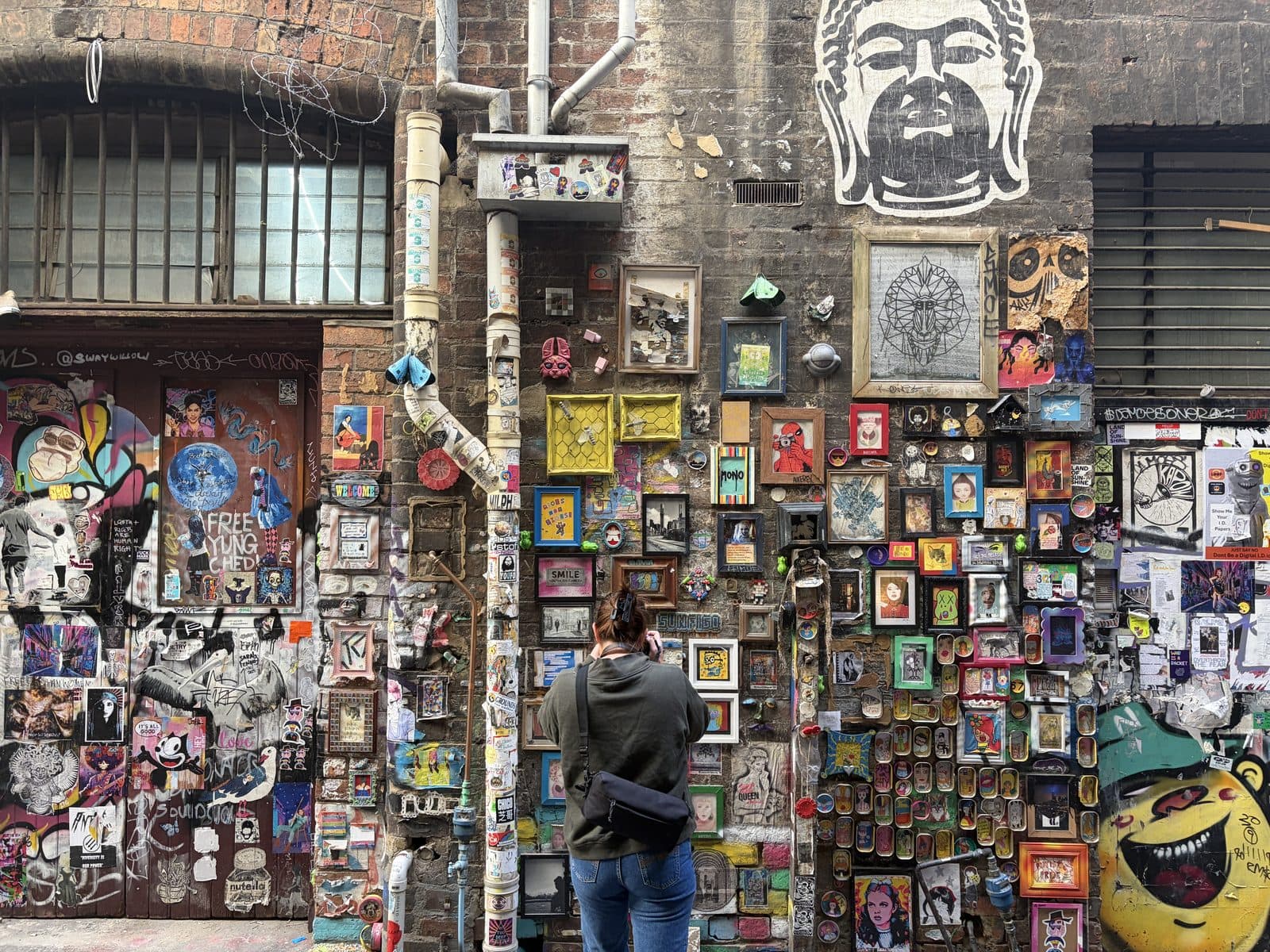
A laneway wall hung with hundreds of tiny framed pictures. Shaded, even light and endless detail to work through.
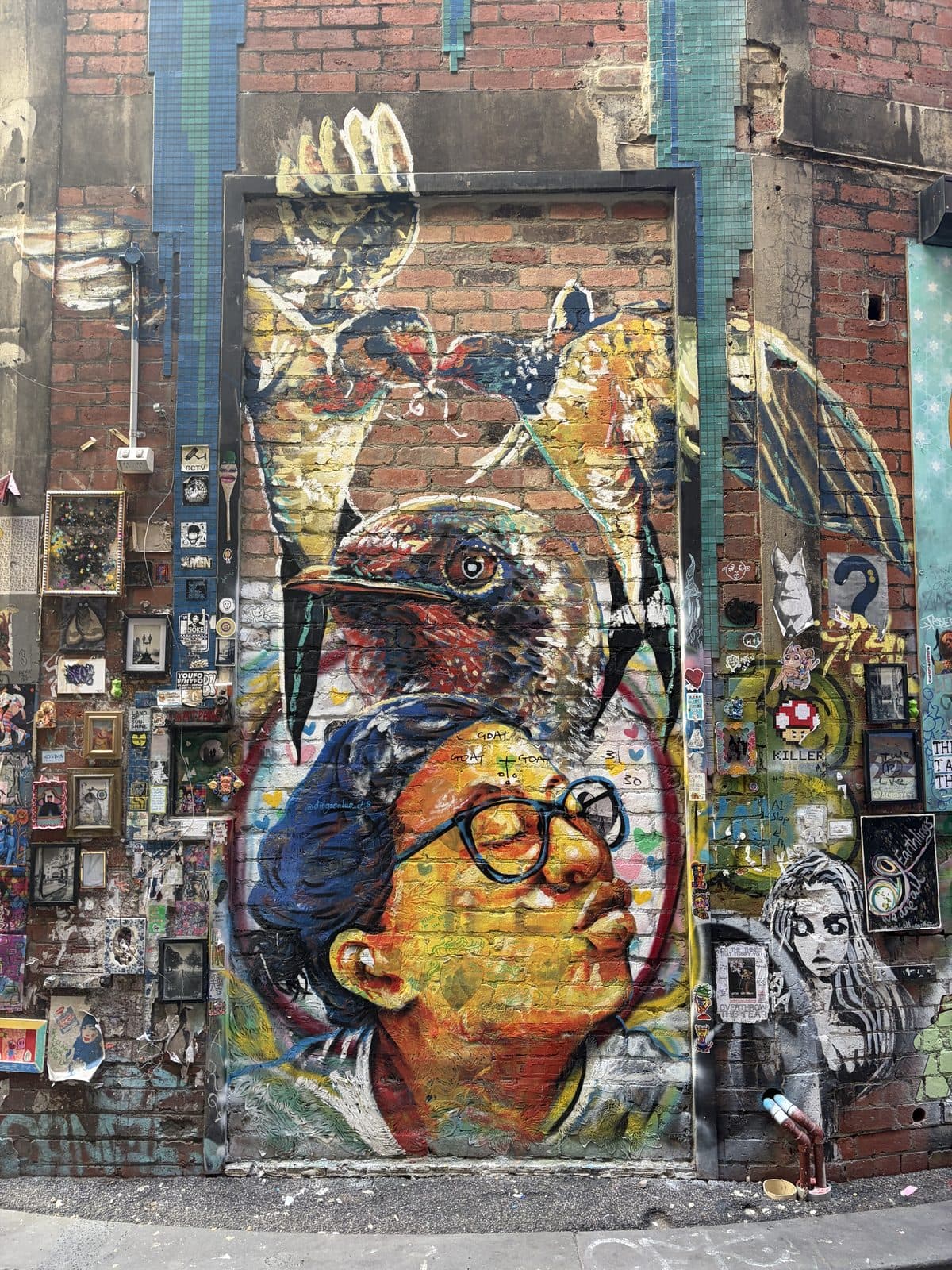
The bird mural on the same wall, with the frames crowding in on both sides.
Shooting Melbourne's Laneways Into the Light
October in Melbourne gives you a sun that is already high by mid-morning, and in a narrow laneway it tends to sit right at the end of the street. Two of the photos here are shot almost straight into it: the laneway below, with the mural of the man and the tree branch glowing above the roofline, and the painted wall earlier in the post.
Backlight is where a camera on auto starts guessing. The meter sees a huge bright sky and darkens everything else, so the walls go to black and the mural loses its colour. In manual the decision is yours: expose for the shaded wall and let the sky burn out, or expose for the sky and keep the laneway as a silhouette. Both are real photographs. Choosing between them is the skill.
The 15-45mm handles flare reasonably well for a kit lens, and the sun rays cutting across the frame in the laneway shot are part of the picture rather than a problem to remove.
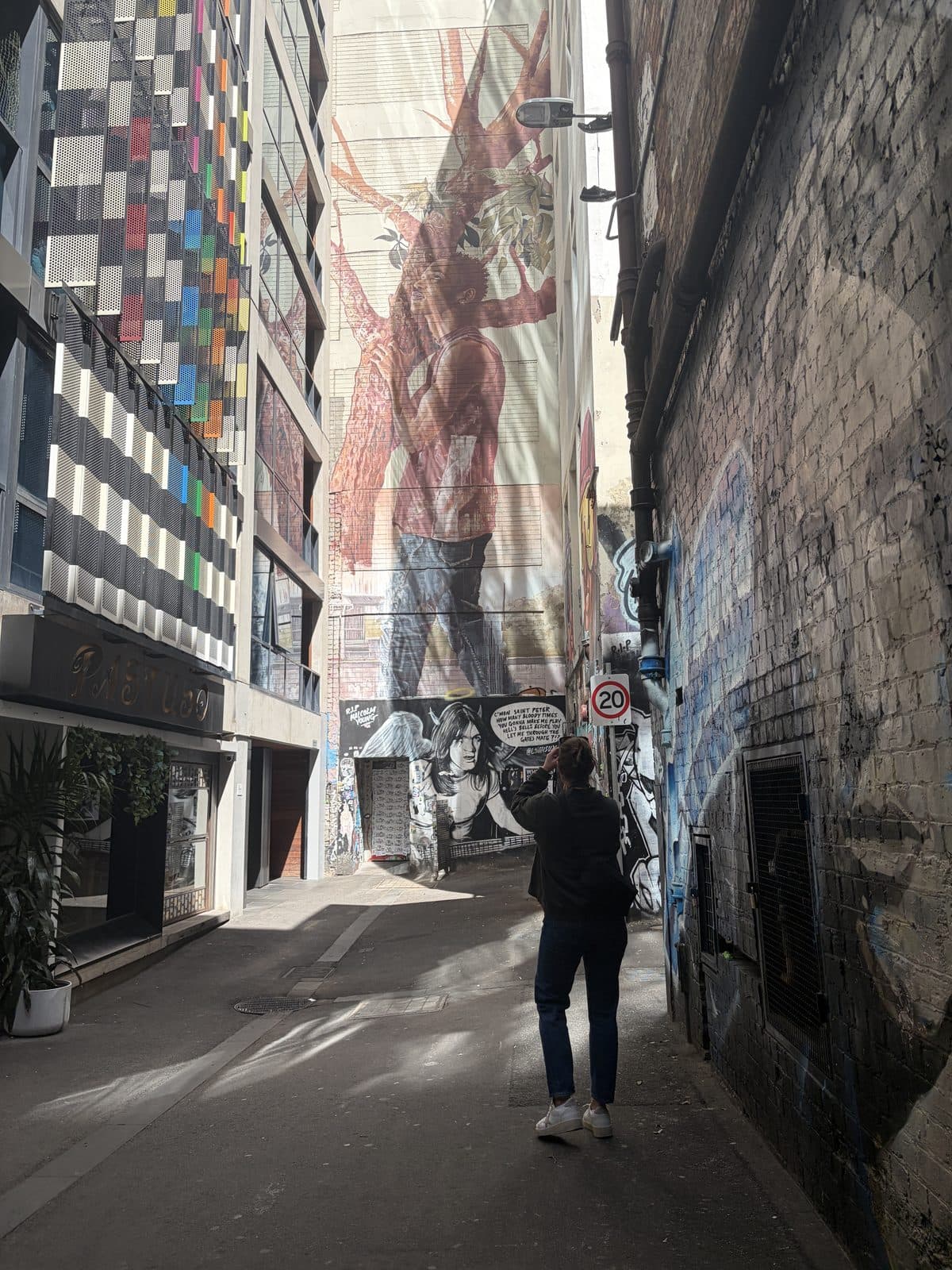
Shooting up the laneway into the sun, with the mural several storeys high at the far end.
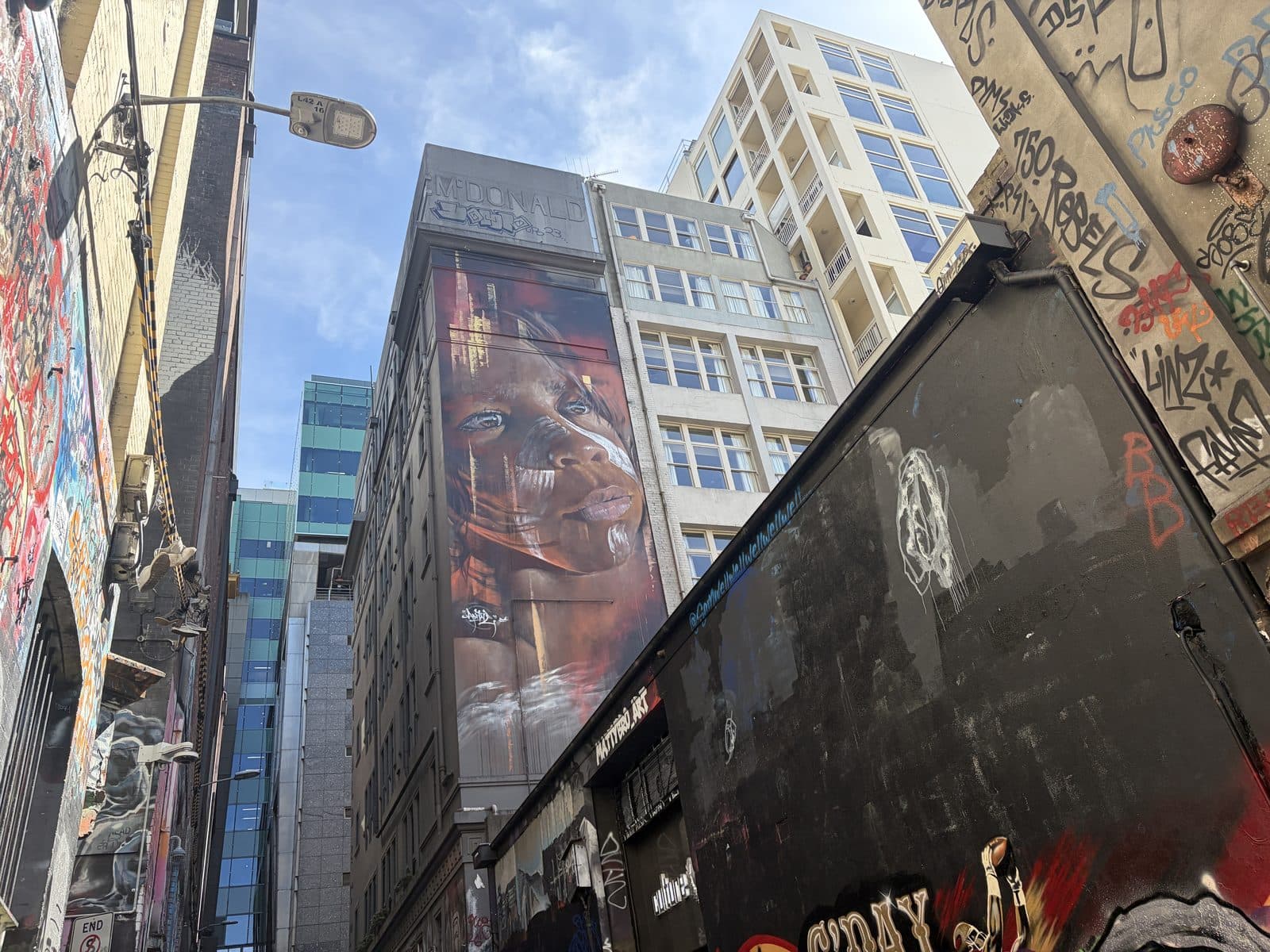
A portrait mural the height of the building, framed between the laneway walls and the towers behind.

A paste-up on a black wall. Flat light, strong colour, and a simple frame to fill.
Starting Manual Mode on a Kit Lens
There is a lot of advice online about which lens to buy before you have learned to use the one you own. The kit lens that came with the X-S20 covers every scene on this walk, from a wall of frames at 15mm to a mural up a building at 45mm, and it carries the same manual controls as anything that costs ten times as much.
The beginner course is built for exactly this starting point: your own camera, the lens you already have, and three hours of shooting with someone beside you. If you are still deciding on a body, the best camera for beginners guide covers the Fujifilm range alongside Sony, Canon and Nikon, and the photography tips for beginners page is a good read before the morning.
Fujifilm X-S20 and the Kit Lens: Quick Answers
Is the Fujifilm X-S20 a good camera for beginners?
It suits a beginner well. The P, A, S, M mode dial and twin command dials work the same way as most other brands, so nothing you learn on it is Fuji-specific. In-body stabilisation forgives slower shutter speeds while you are finding your feet, the grip is comfortable for three hours of walking, and the big battery lasts the whole morning. Fuji's film simulations are there when you want them and out of the way when you don't.
Can you learn manual mode on the XC 15-45mm kit lens?
Yes. Manual mode is a camera setting, and every lens works in it. The kit lens gives you a useful 23-69mm equivalent range, optical stabilisation, and a variable aperture from f/3.5 to f/5.6. What it lacks is an aperture ring, so you set aperture on the camera's command dial, and a wide maximum aperture, so very shallow background blur is harder to get. Neither stops you learning exposure.
How do you change aperture on the X-S20 when the lens has no ring?
With the mode dial on M, one command dial controls shutter speed and the other controls aperture. Which dial does which can be swapped in the menu, so pick the layout that feels natural and leave it. The live view shows the result as you turn, so there is no guessing.
What does f/3.5-5.6 mean on the Fujifilm XC 15-45mm?
It is the widest aperture available at each end of the zoom: f/3.5 at 15mm and f/5.6 at 45mm. As you zoom in, the widest setting closes down gradually between those two. In manual mode an exposure set at 15mm will come out darker at 45mm unless you raise the ISO or slow the shutter to match.
What the Course Covers
- Manual exposure: setting ISO, shutter speed, and aperture for the scene in front of you
- Finding your way around the X-S20's command dials and mode dial so the settings become second nature
- Working a variable aperture kit lens, and keeping exposure steady as it shifts through the zoom
- Shooting into the light: choosing what to expose for when the sky and the laneway disagree
- Framing street art and murals, from a wall of tiny frames at 15mm to a mural up a building at 45mm
The course runs 3 hours on foot through Melbourne CBD, on your own camera, in full manual. The written guides cover the settings if you want to read up first, and there is a Lightroom course for the RAW files afterwards. Eliza's lens has been on this walk before: Megan shot the same XC 15-45mm on a Fujifilm X-T30 III. You can also read about Penny's session on a Fujifilm X100VI or Dam's on a Fujifilm X-T5.
Your Turn
The DSLR & Mirrorless Express Photography Course runs on Fridays or Saturdays in Melbourne CBD. Max 2 students. $499. Check our photography tips for beginners if you want a head start before you come.