A Fujifilm X100VI and One Fixed Lens on a Melbourne Photography Course
The dials are the whole point of a Fujifilm X100VI, and Rachael worked all three across three hours of manual mode in Melbourne's laneways.
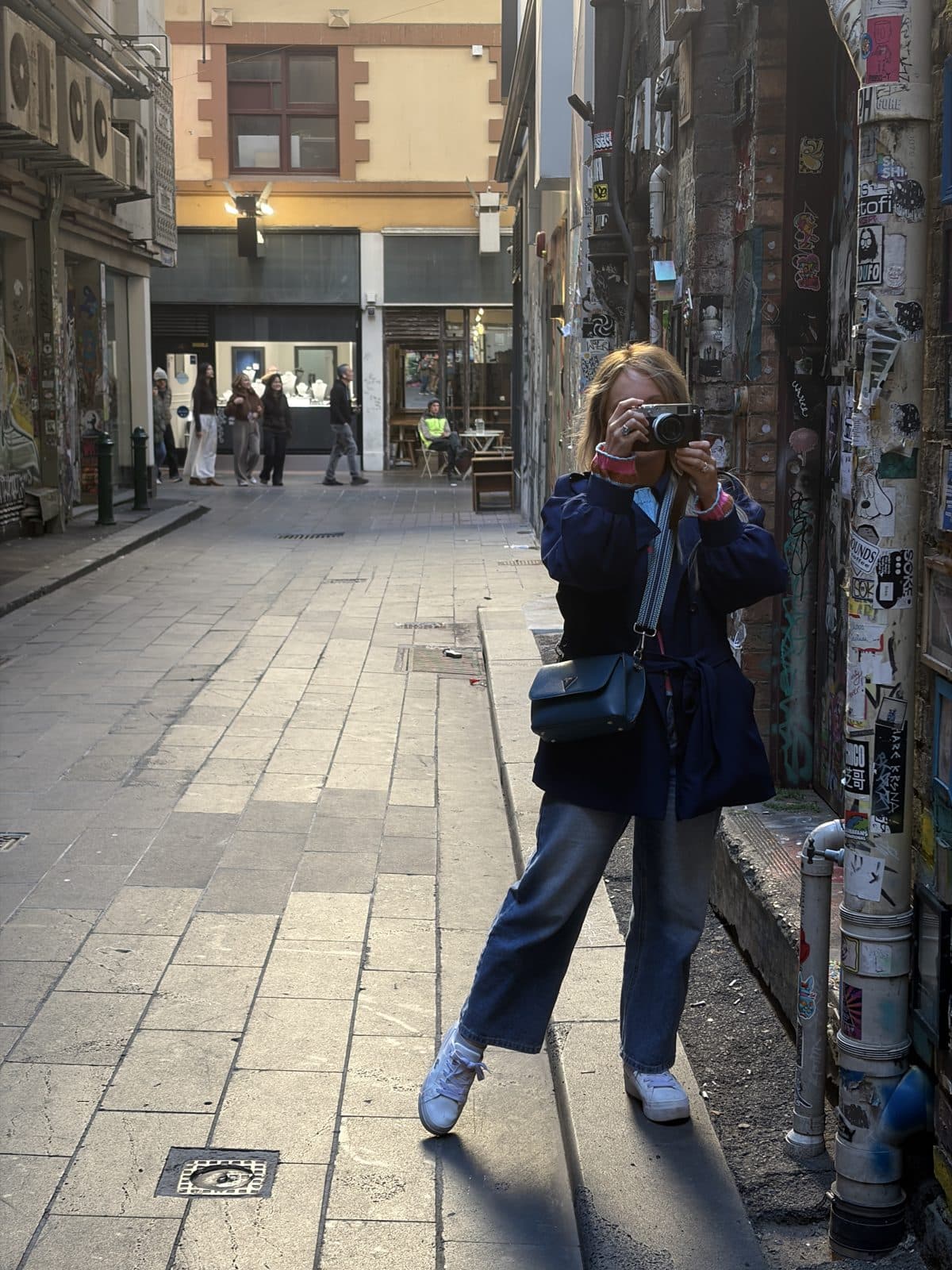
Rachael working a sticker-covered laneway wall, the X100VI up at eye level.
The Camera: Fujifilm X100VI
Rachael shot a Fujifilm X100VI, a compact with a 40-megapixel APS-C sensor and a fixed 23mm f/2 lens. On this body 23mm gives roughly a 35mm-equivalent field of view, the classic street focal length: wide enough for a full laneway, tight enough to isolate one wall of stickers. There is no zoom and no lens to swap. To change the framing you move your feet, which is a large part of what makes the X100VI such a good camera to learn on.
Hers came set up for the street, with a brown leather half-case, a SmallRig thumb grip, and a lens hood on the front. It also has in-body stabilisation, which steadies the frame when the light drops in a covered lane and the shutter slows. If you're still working out which camera to bring, our beginner camera guide walks through what to look for.
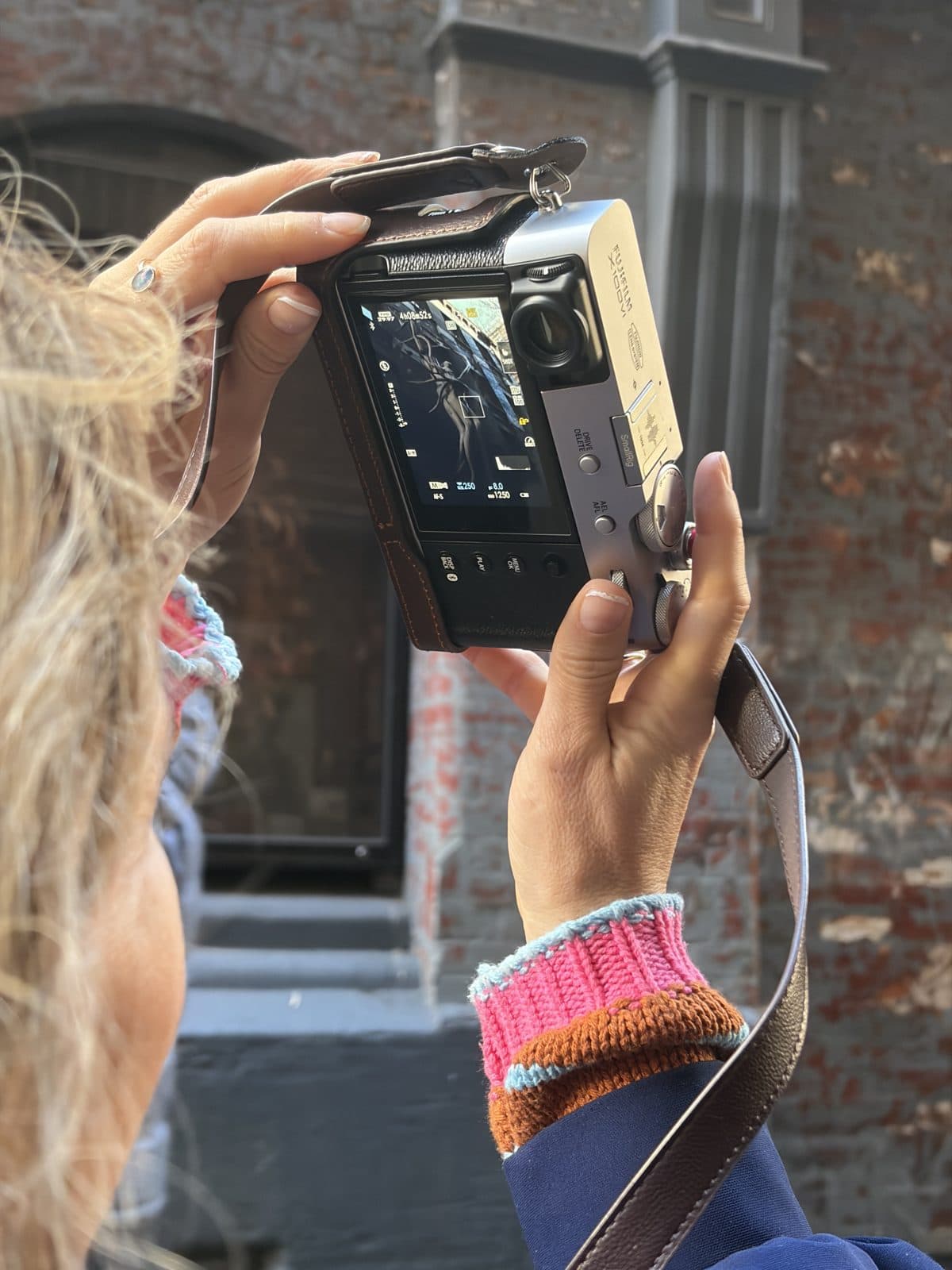
The X100VI, top plate and all, held up to check a frame against old brick.
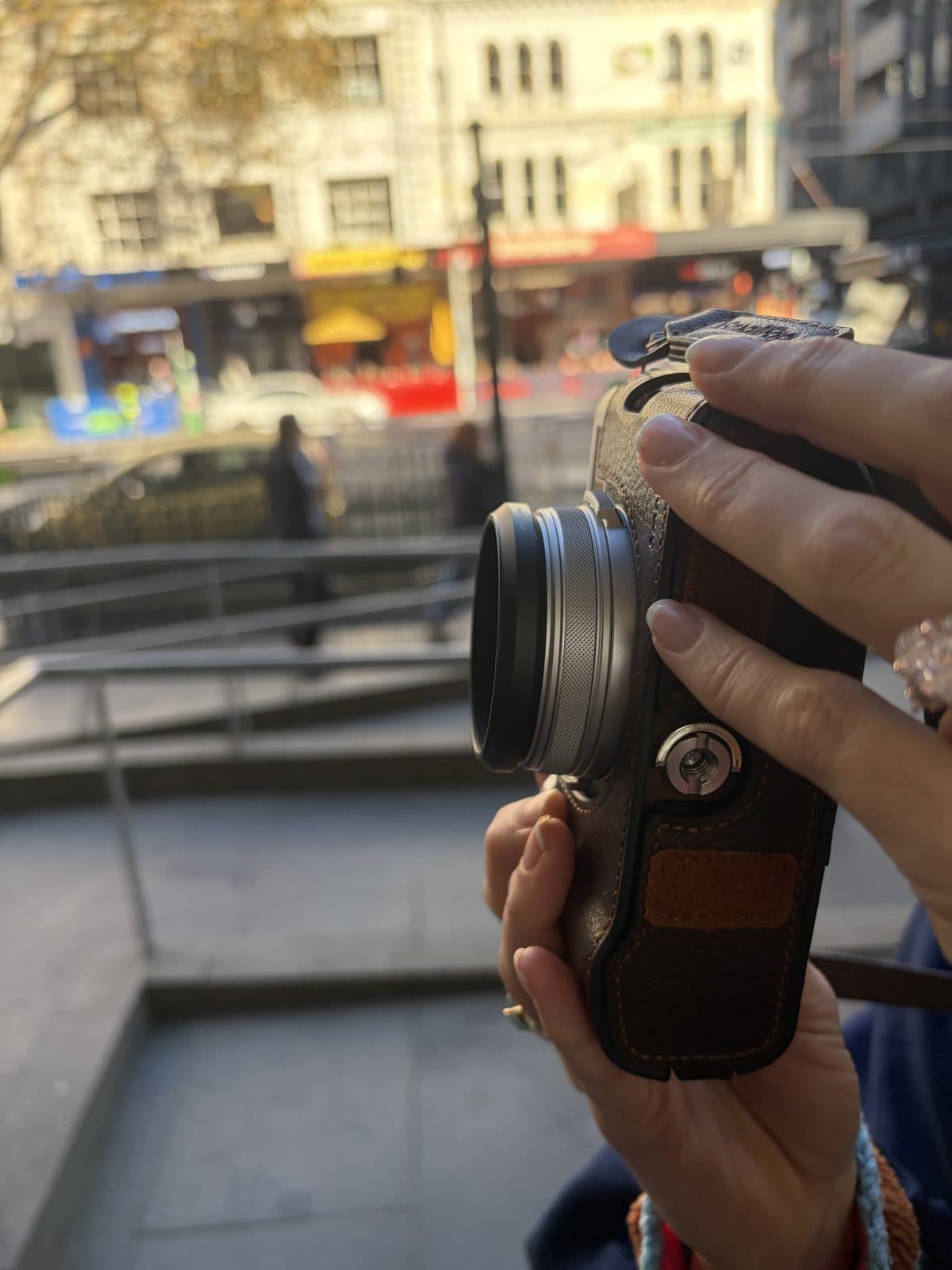
Leather half-case, thumb grip, and lens hood, a compact built for walking the city.
Manual Mode on the X100VI
The X100VI is built around dials, which is what makes it such a clear camera to learn manual on. Aperture lives on a ring around the lens, shutter speed sits on a dial on top, and ISO has its own control. You can read your whole exposure off the top of the camera before you even raise it. Three hours is enough time to get those dials under your fingers and to watch what each one does to a photo as the light changes around the city.
The numbers move with the light. In the shade of a sticker-lined laneway the back screen reads 1/125 at f/8, ISO 800, the kind of settings a covered lane asks for. Reading a scene and landing on figures like that is what the exposure triangle is for, and it's most of what the three hours cover.
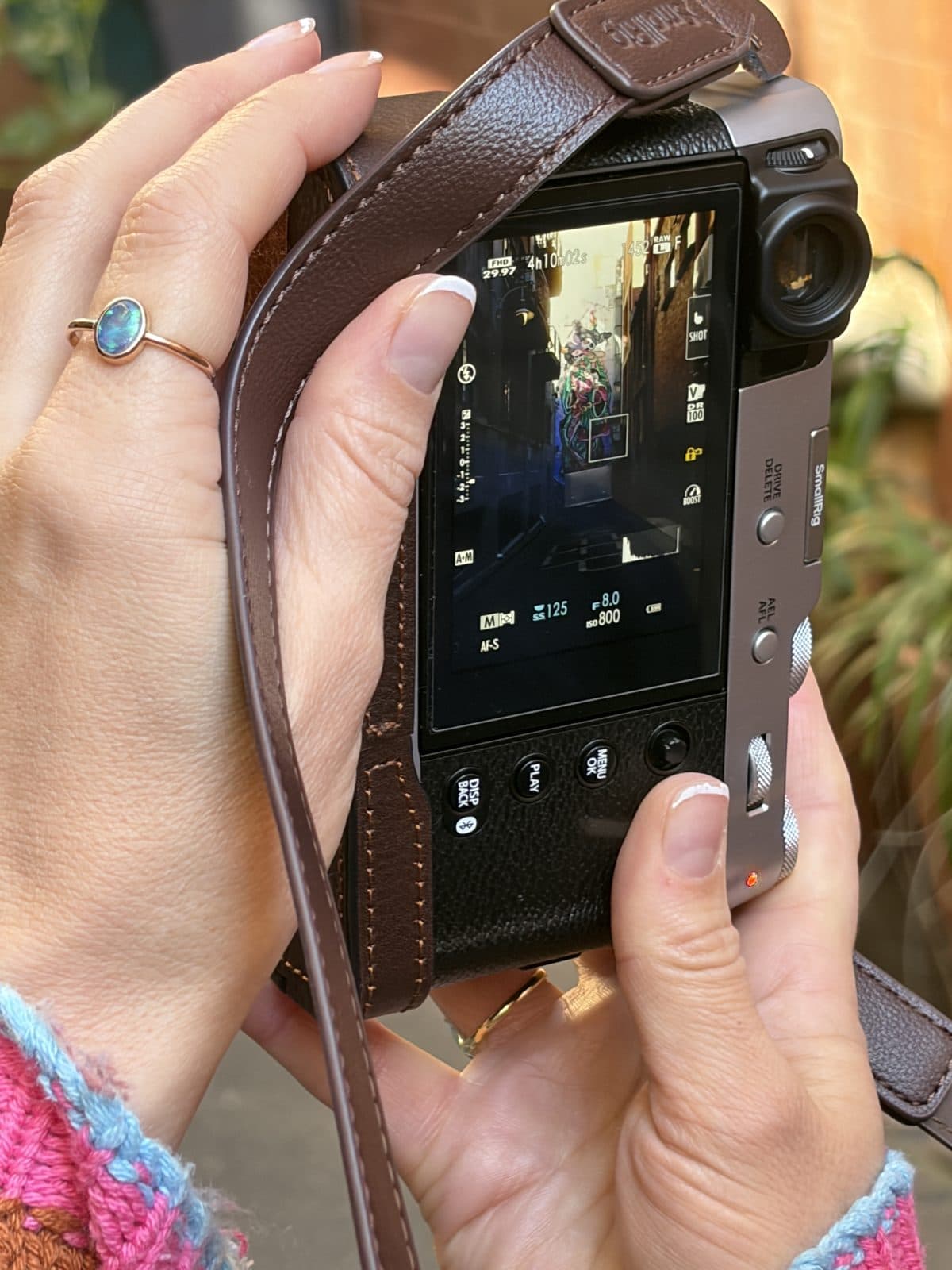
The back screen mid-session: M, 1/125, f/8, ISO 800, a laneway mural on the review.
Three Hours Through Melbourne CBD
The session moves through the city as it shoots. A winter morning opens onto Melbourne's laneways, where low sun comes down one end and deep shade fills the other, and the walls are layered with stickers, paste-ups, and paint. A quiet cobbled lane off Drewery Place, a cafe front under a wall of street art, a mural on old brick, each one asks for a slightly different exposure and a different spot to stand.
With one fixed focal length the framing comes from your feet. Instead of zooming, you step in for the sticker detail and step back for the full lane, and after an hour of that the moving around starts to feel like part of seeing the shot. It's a different rhythm to a zoom, and it suits a camera like the X100VI.
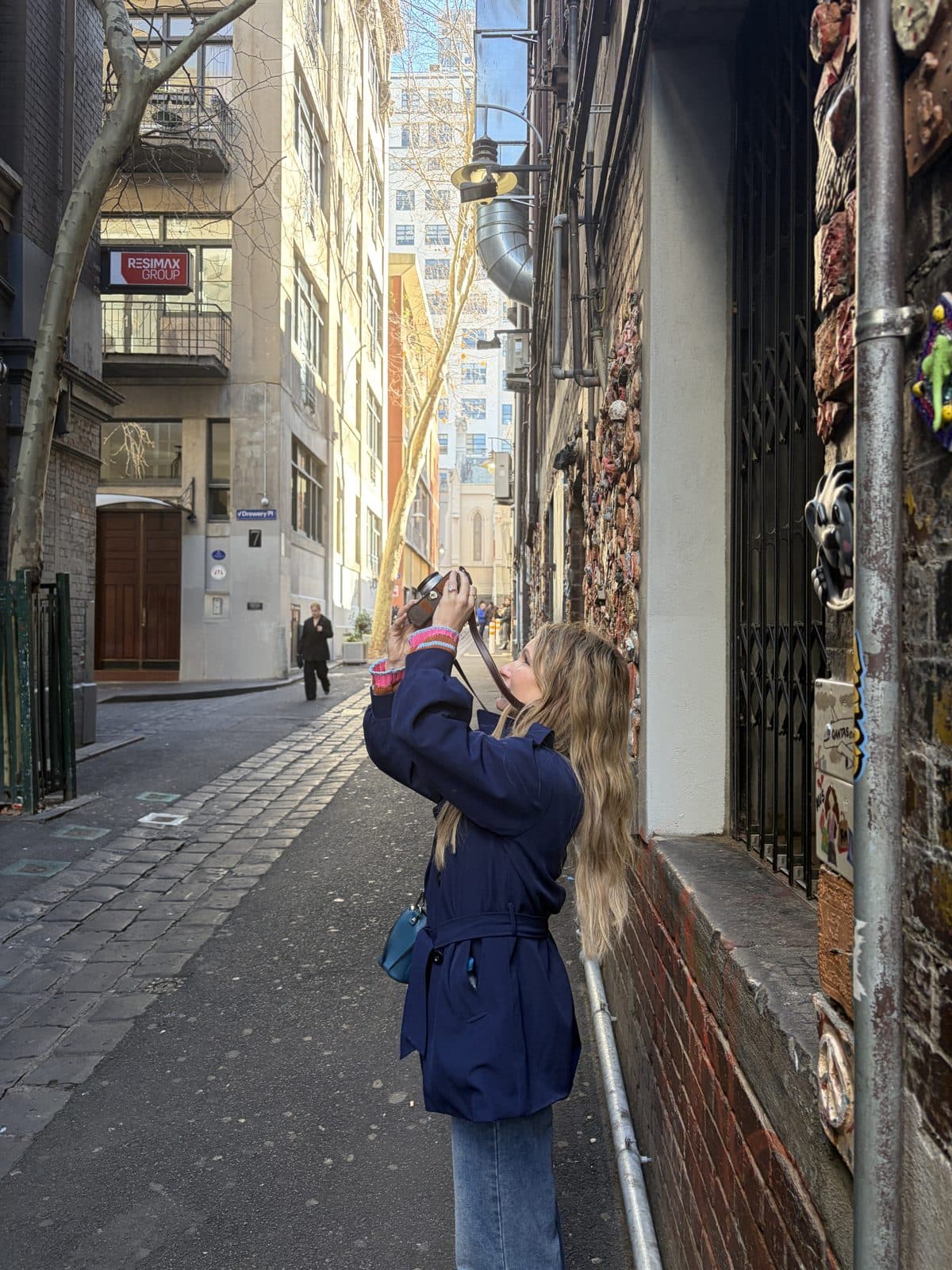
Reaching up for a detail on a brick wall, a quiet cobbled lane off Drewery Place behind.
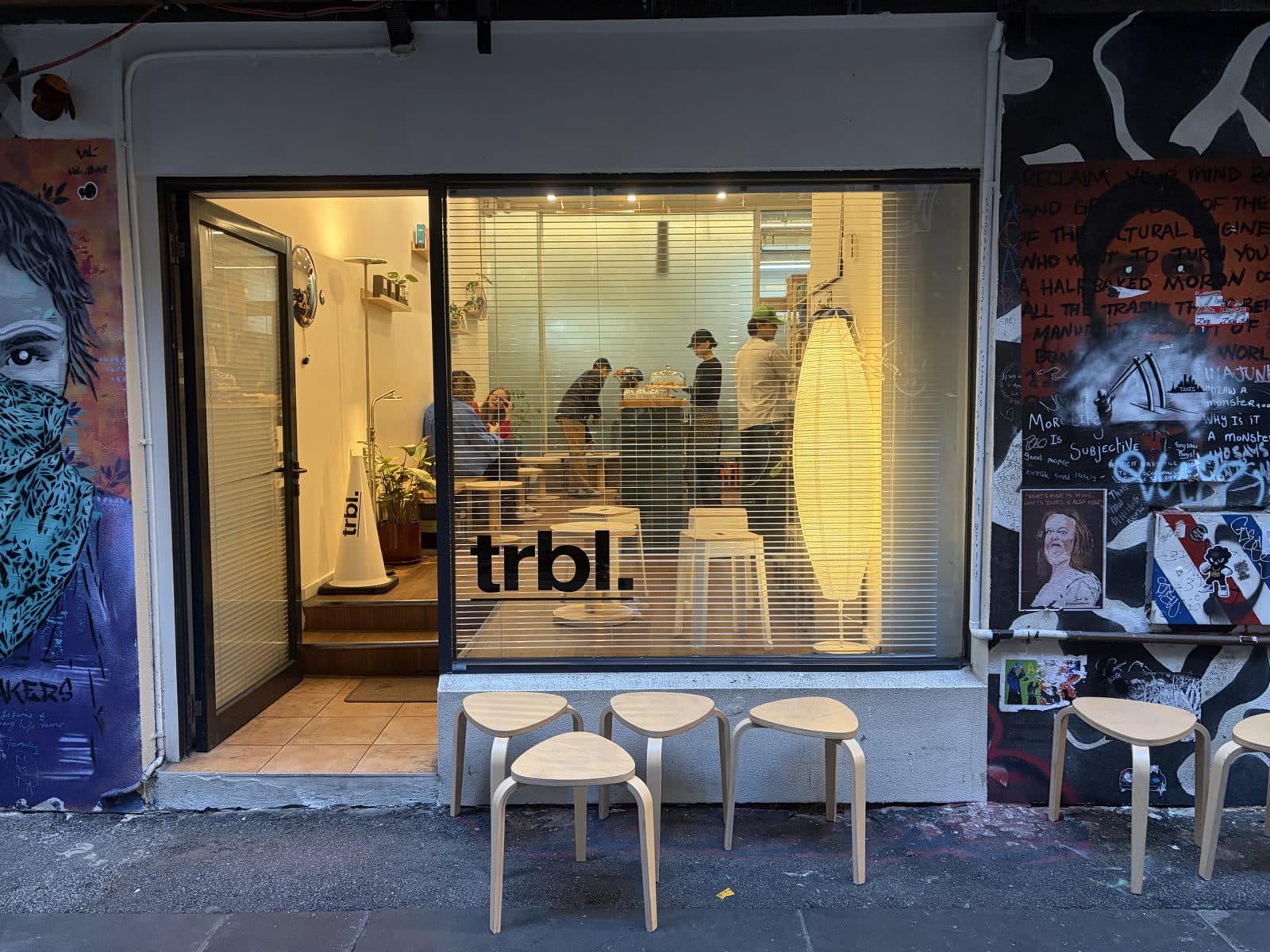
A laneway cafe front boxed in by murals, warm window light against painted brick.
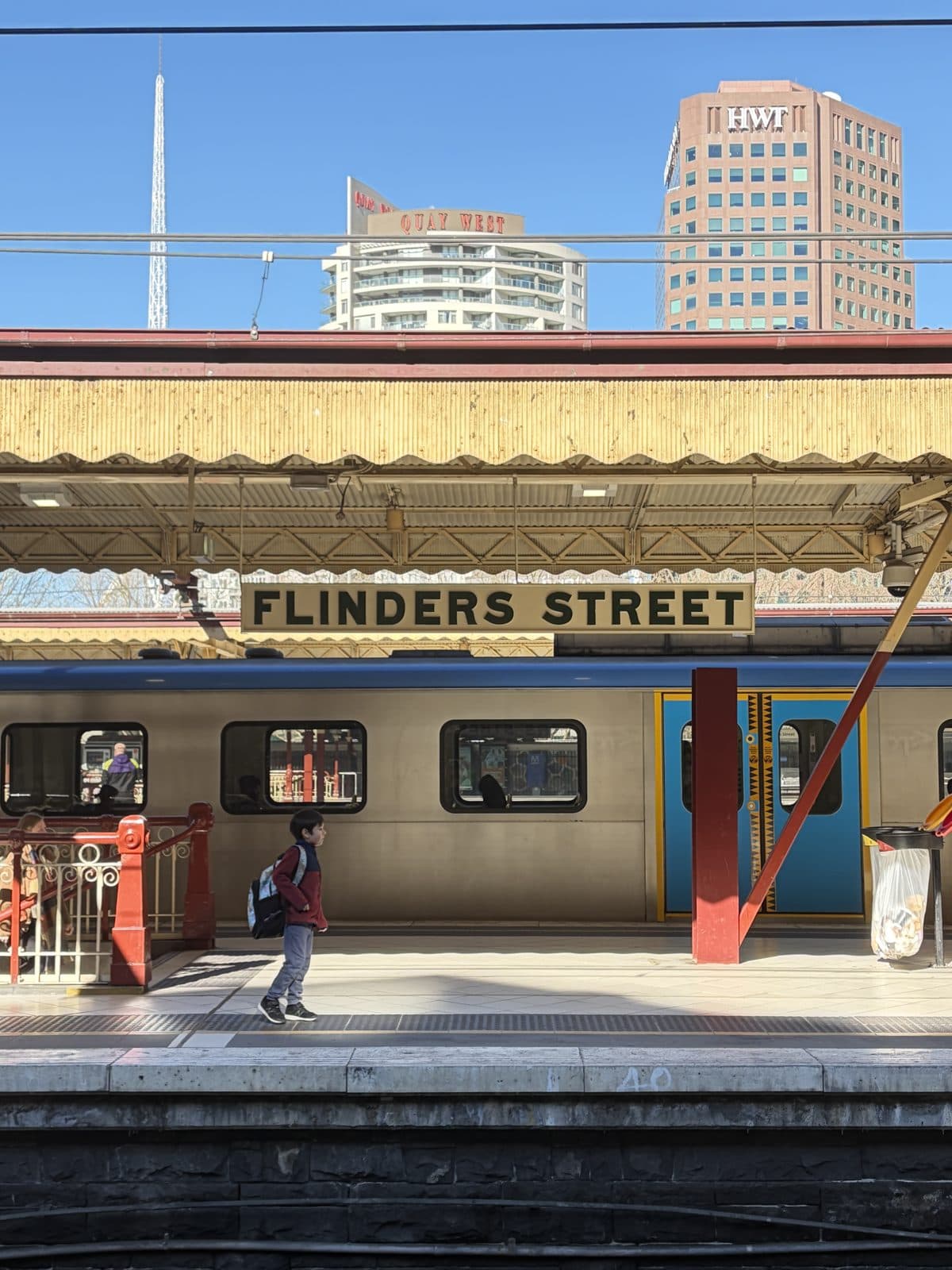
Flinders Street Station in clear winter light, a single figure holding the platform.
Fujifilm X100VI: Quick Answers
Is the Fujifilm X100VI good for learning manual mode?
Yes, and the dials are the reason. Aperture sits on a ring around the lens, shutter speed on a top dial, and ISO on its own control, so each part of the exposure has a physical place you can see and turn. You can read your settings off the top of the camera before you raise it. The course covers your camera's specific layout so the controls stop getting in the way.
Is a fixed 35mm-equivalent lens limiting for a photography walk?
It's freeing more than limiting. One focal length means the framing comes from where you stand, so you step in for a detail and step back for a full laneway instead of turning a zoom ring. The 35mm-equivalent field of view is wide enough for a street scene and tight enough to pick out one subject, which is why it's a long-standing street photography choice.
Do I need an X100VI or a compact for the course?
No. Manual mode works the same on any camera with full manual control, from a kit-lens body to a fixed-lens compact like the X100VI. Bring whatever you own. The three hours go on your camera's own dials and menus, so you leave able to shoot manual on the body you already have.
Where does the photography course go in Melbourne?
Through Melbourne CBD on foot. A session moves through the street-art laneways, past murals, cafe fronts, and heritage brick, and out to landmarks like Flinders Street Station. The variety is deliberate: open sun, deep shade, and backlight in one walk gives you a lot of different light to set exposure for.
What the Course Covers
- Full manual mode on your own camera, including your specific dials and menu layout
- Shutter speed, aperture, and ISO - what each one does and when to change it
- Reading light in real conditions, from open sun to shaded laneways
- Working with whatever lens you bring, from a kit zoom to a fixed 35mm-equivalent
- Composing shots on location across Melbourne CBD
The files from a session like this are where the work starts. The next step is developing them in Lightroom. You can also see how Penny worked the same X100VI from the Royal Arcade to the laneways, how Dam shot Melbourne's backlit streets on a Fujifilm X-T5, how Megan and Sage shot two Fujifilm cameras across the city, or how Julia worked a Sony A7 III and a 24-105mm zoom.
Your Turn
The DSLR & Mirrorless Express Photography Course runs on Fridays or Saturdays in Melbourne CBD. Max 2 students. $499. Check our photography tips for beginners if you want a head start before you come.